


January 22 | Burma Independent Voice
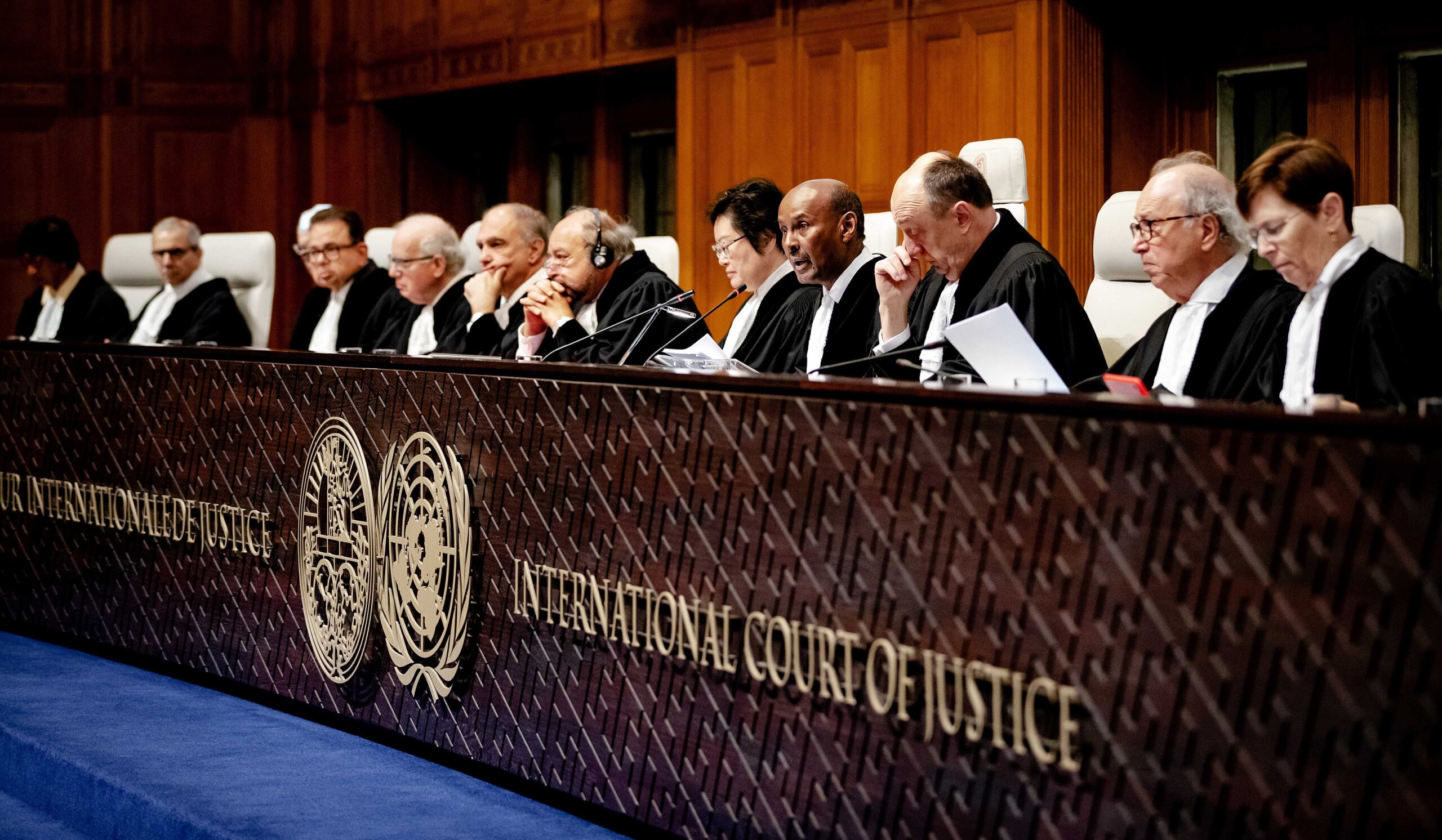
During the International Court of Justice (ICJ) hearing held in The Hague on January 20, 2026, nine judges pressured both Myanmar and The Gambia with pointed questions regarding the factual integrity of the case.
The inquiries focused primarily on the reliability of witness evidence and the status of Myanmar’s domestic investigations. Observers noted that the nature of these questions highlights the profound seriousness with which all judges are approaching this case.
Judge Tomka initiated the questioning directed at The Gambia, specifically addressing the inclusion of anonymous witnesses in their submissions. He asked, “How was the identity of these witnesses verified?” and further inquired how The Gambia ensured that the same individual did not provide multiple separate testimonies. Judge Tomka noted Myanmar’s argument that many of the witness accounts cited by The Gambia are anonymous and that in at least four instances, it appeared a single person provided more than one statement. He asked The Gambia to explain the methodology and system used to verify the authenticity of evidence obtained through various organizations.
On the other side, Judge Brandt questioned Myanmar regarding military specifics. He asked what standards were used to distinguish between civilians and enemies during “clearance operations” and how the strength of ARSA was determined. Judge Brandt requested specific details on ARSA’s influence among the Rohingya population, its membership numbers, and its arms and ammunition holdings. He also questioned the military’s use of the term “supporter,” asking for a precise definition of who is considered a “supporter” and what criteria ground troops use to distinguish between a “military target” and an “innocent civilian.”
Similarly, Judge ad hoc Pillay requested Myanmar to present any evidence or records demonstrating instances where the military truly protected civilians.
Judge Gómez Robledo questioned whether Myanmar’s refusal to grant access to international investigative bodies since 2017 is consistent with the “international cooperation” commitment outlined in the Genocide Convention. Pointing out that the preamble of the Genocide Convention emphasizes international cooperation as a vital element, he asked Myanmar to explain why it refused to cooperate with international investigators despite resolutions from the UN General Assembly.
Regarding incidents of sexual violence, Judge Charlesworth questioned The Gambia on whether they could provide precise locations for the “hundreds” of incidents cited to support the claim that such violence was “widespread.” Additionally, in a joint question from Judge Charlesworth and Judge ad hoc Pillay, Myanmar was asked whether—given previous admissions that such abuses might have occurred—these incidents were actually investigated and what the results were.
Judge Cleveland raised a point of inconsistency in Myanmar’s stance, questioning why the Myanmar side rejects the UN Fact-Finding Mission (FFM) reports as unreliable yet cites those same reports when presenting information about ARSA that benefits their own argument.
Furthermore, Judge Orescu and Judge ad hoc Kreß requested precise legal interpretations regarding the terms “intent” and “substantial part” in the context of genocide.
Observers analyze that these questions demonstrate the level of granular detail the ICJ is scrutinizing in this case, and the responses from both sides could have a significant impact on the outcome. Both parties are required to provide oral responses to these questions during the second round of hearings, which many believe could lead to a major turning point in the case.