


May 25, 2026 | Burma Independent Voice
U.S. Secretary of State Marco Rubio stated on Monday that an agreement to end the war with Iran could materialize soon, even as President Donald Trump continues to manage and temper public expectations regarding a definitive breakthrough.
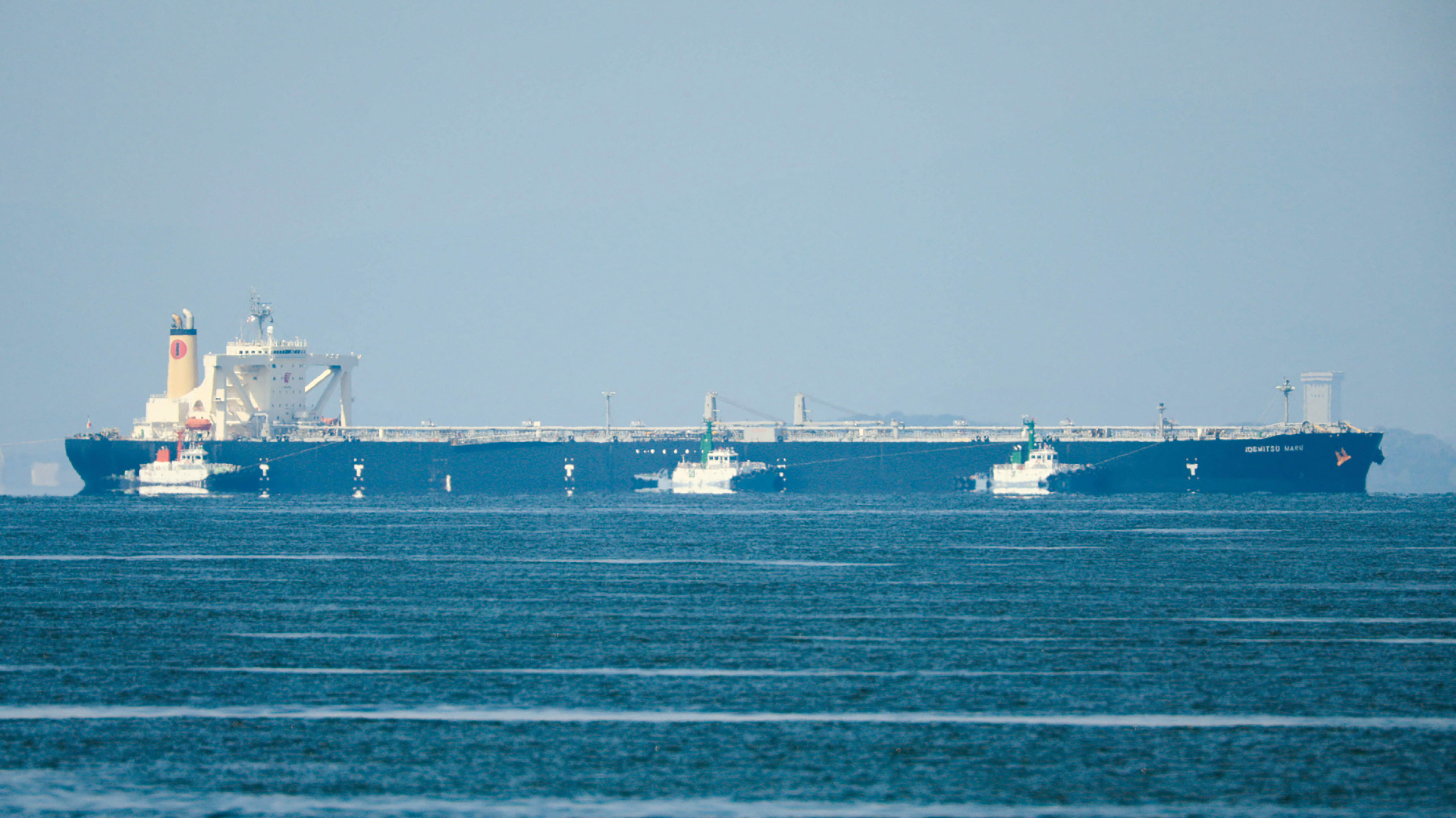
The conflict erupted on February 28 following joint U.S. and Israeli military strikes inside Iran, prompting Tehran to respond with extensive missile and drone attacks across the region. While international mediators continue to push for a comprehensive peace treaty, both Washington and Tehran have largely maintained a fragile ceasefire since April 8. Nevertheless, Iran retains its tightening grip on Persian Gulf maritime corridors, while the U.S. maintains its strict naval blockade of Iranian ports.
Speaking to reporters during an official diplomatic visit to New Delhi, India, Secretary Rubio said, “We had anticipated some major breakthroughs last night or early today, but I caution against reading too much into the timing. We have already laid out a very solid proposal aimed at reopening the strategic straits.”
Rubio’s remarks followed public signals from both Washington and Tehran indicating tangible progress, though President Trump on Sunday explicitly instructed his negotiating team to avoid rushing into an agreement.
Writing on his official Truth Social platform, President Trump stated: “I have instructed my representatives not to rush a deal, as time is entirely on our side. The comprehensive port blockade on Iran will remain fully in effect until a final agreement is officially reached and signed.” Trump added that the framework of the agreement has been extensively negotiated, leaving only final verifications pending among the U.S., Iran, and several other nations.
Conversely, Iran’s Tasnim News Agency reported that “no definitive agreement has yet been reached” on several core clauses of the potential deal, including the repatriation of long-frozen Iranian financial assets.
The emergence of cautious optimism surrounding a potential end to the hostilities triggered a sharp drop in global energy markets on Monday. Crude oil prices tumbled by nearly 5 percent, with North Sea Brent crude falling to $99.41 per barrel and U.S. West Texas Intermediate (WTI) dropping to $92.49 per barrel.
In an interview with The New York Times, Secretary Rubio pointed out that while the diplomatic framework enjoys broad backing from regional allies, a comprehensive nuclear resolution “cannot simply be drawn up on a napkin in a matter of hours.” He added, “At present, seven or eight nations in the region support this diplomatic path, and we are prepared to move forward.”
Although Rubio had previously hinted that a final resolution might be clinched as early as Sunday, Trump quickly curbed expectations, posting: “If I make a deal with Iran, it will be the absolute best and right one. As of right now, it is not fully negotiated.”
Israeli Prime Minister Benjamin Netanyahu also stated on Sunday that he and Trump remain in total alignment that “any final accord concluded with Iran must permanently eliminate the Iranian nuclear threat.”
Iranian officials confirmed that a draft agreement is indeed on the table. However, they emphasized that contentious negotiations over Iran’s nuclear program—particularly Washington’s long-standing demand for a permanent halt to uranium enrichment—are slated to be deferred for 60 days following the signing of the initial deal.
Iranian President Masoud Pezeshkian reiterated on state television that Tehran remains prepared to assure the international community that it is not seeking to develop nuclear weapons, though it remains unclear whether this pledge will be formalized in writing within the text of the treaty.
According to Iran’s Fars News Agency, “during the implementation phase of the talks, oil-related sanctions will be temporarily suspended to allow Iran to freely export its crude, natural gas, and petrochemical products.”
The broad parameters of the deal were discussed during a high-level conference call on Saturday between President Trump and leaders from Saudi Arabia, the United Arab Emirates (UAE), Qatar, Egypt, Jordan, and Bahrain, alongside representatives from Turkey and Pakistan. Pakistani Prime Minister Shehbaz Sharif—whose country mediated historic face-to-face talks between U.S. and Iranian delegations in April—expressed hope that Islamabad would host another round of high-level talks in the near future.
Concurrently, Lebanon remains entangled in the broader conflict after the Iran-backed group Hezbollah launched retaliatory strikes against Israel on March 2 following the initial U.S.-Israeli strikes that killed a top Iranian leader. Despite a ceasefire agreement reached on April 17, routine violations persist from both sides, with the Israeli military continuing its heavy bombardment of Hezbollah operational targets across southern and eastern Lebanon.
On Sunday, Secretary Rubio accused Hezbollah of attempting to “push Lebanon back into absolute chaos,” condemning the group’s provocative rhetoric aimed at destabilizing Lebanon’s “democratically elected government.” Rubio’s comments were a direct retort to Hezbollah leader Naim Qassem, who recently asserted that citizens “have every right to take to the streets and overthrow the government” following intense Israeli bombardments and stringent U.S. sanctions targeted at Al-Qard Al-Hassan, a financial institution that provides interest-free loans to Shia Muslim communities.