
Opinion Piece | Burma Independent Voice
By Kyawt Maung
Ants Are Always Busy
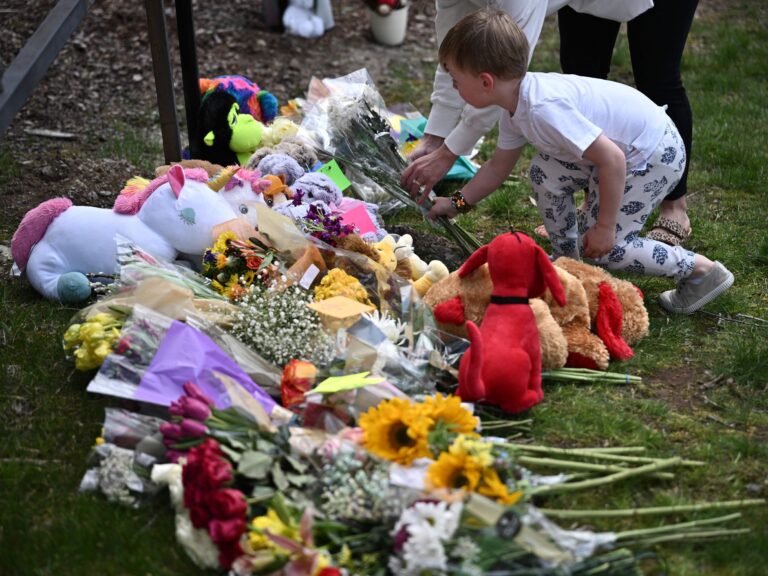
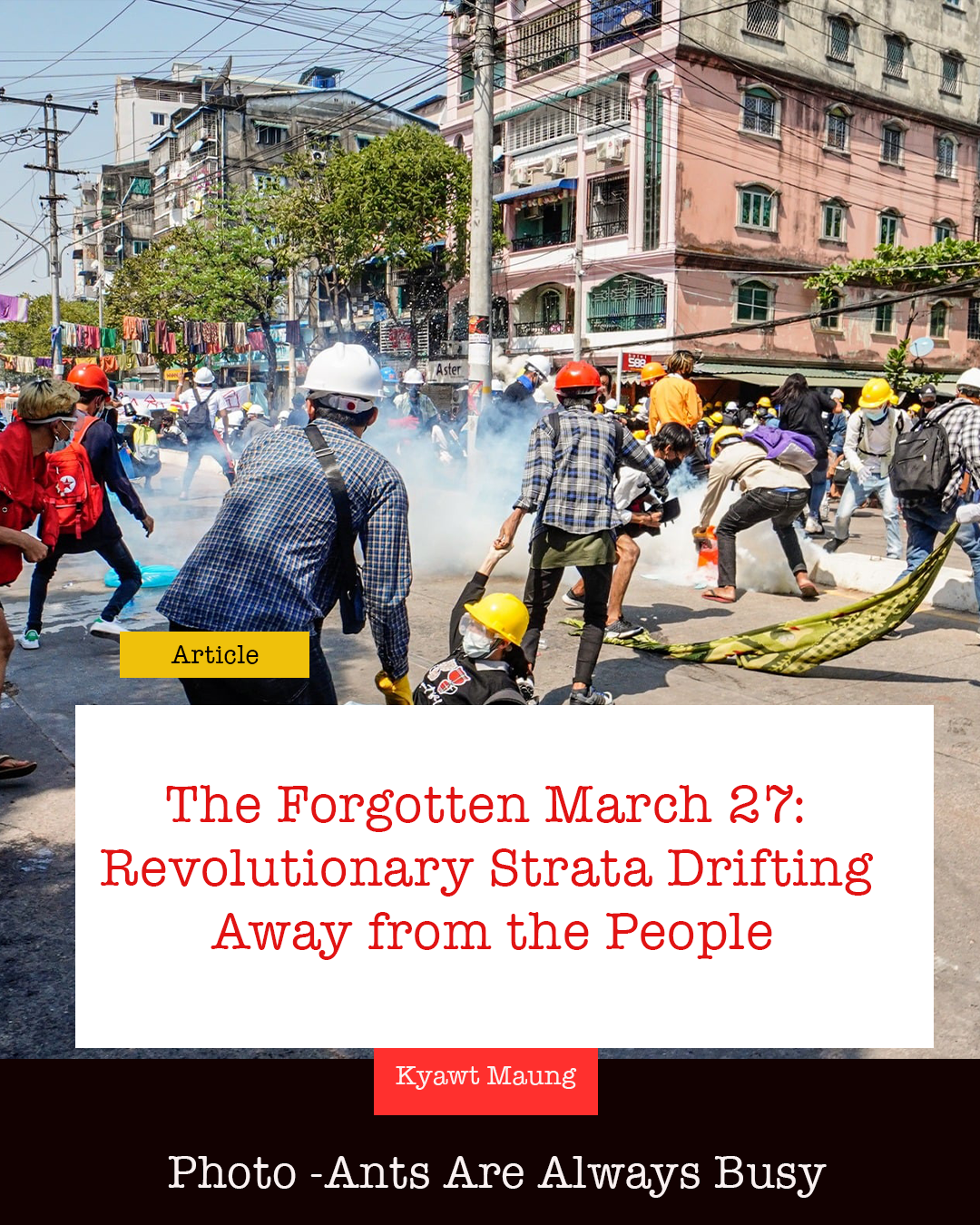
March 27, 2021, marks the day with the highest death toll of citizens who took to the streets to protest the coup and demand democracy during the Spring Revolution. It was the “Bloody Revolutionary Day” that clearly manifested the military’s form of terrorism during this revolutionary period.
On that single day in 2021, the coup military killed 114 people in more than 40 cities across the nation, including Yangon, Mandalay, Bago, Sagaing, Magway, and Shan State. At least six children under the age of 15 were shot and killed that day. Throughout the month of March 2021 alone, over 500 protesters, including minors, were brutally killed by the military.
Now, five years later, the revolution no longer holds a worthy remembrance for March 27. From the various organizations leading the revolution to civil society organizations and news media, there is no longer a fitting memorial for those who gave their lives while protesting during the Spring Revolution on March 27.
The reason for saying this is that, even after March 27, 2025, has passed, there was absolutely no expression of remembrance for this event, nor any solemn tribute to the lives sacrificed.
The lives given during the Spring Revolution are not just mere statistics. These lives were the pillars that carried the Spring Revolution to its current state and fueled the firm conviction that the military dictatorship must be uprooted. The armed revolution itself was born from the sacrifice of these lives. It is essential not to forget that the courage of the people who defied the military in 2021 without any weapons on the streets is the “seed” of today’s armed revolution.
Tragically, the National Unity Consultative Council (NUCC), the National Unity Government (NUG), the Committee Representing Pyidaungsu Hluttaw (CRPH), along with armed revolutionary organizations, civil society organizations, and the news media, completely failed to properly honor the March 27 of the Spring Revolution.
The General Strike Coordination Body (GSCB) and the General Strike Committee against Dictatorship (GSC) also did not release any solemn statements regarding March 27.
While the NUG and CRPH issued messages for Fascist Resistance Day on March 27, there was absolutely no mention of the events of March 27, 2021.
A day with the highest casualties caused by the military’s violent crackdown on protesters is a day that must be recorded in history. Specifically, it should be a day that is always remembered and honored in the fight against military dictatorship. Yet, it is now being forgotten.
Dictators want the public to forget historical events more than anything. “Forgetfulness is the enemy of the revolution.” This leads to questions about whether today’s revolution is now co-existing with its true enemy.
Looking at it realistically, the organizations and individuals leading the revolution today, across various sectors, are becoming distant from the actual public. This results in the revolution and the masses becoming separate and alienated from each other.
As the revolution surpasses five years, various strata have emerged: the elite, the intellectual, and the grassroots.
Ineffective discussions in air-conditioned rooms, Zoom meetings lacking new insights, and political self-indulgence in social media circles and over drinks—these strata are gradually consuming the lives and livelihoods sacrificed throughout the revolutionary period. The awareness of whose backbone this current path to liberation is built upon is fading away.
The bloody revolution is not just for mourning and grief; it is for carrying forward the hopes of those who fell. The question emerging now is: who is continuing to struggle for those hopes, who is carrying them, who is bearing the burden, and who honors them?
In the revolutionary and political current, there is talk of federalism, armed revolutionary paths, political strategies, and tactics. Much has been written and said, from research papers to opinion pieces. Discussions, open-door and closed-door meetings, and conferences over these five years have been more than excessive.
While submerged under meeting minutes, research papers, discussions, and tactical maps for five years, these often turn out to be repetitive old lessons and already-understood data.
Not a single new insight has emerged to break through the current crisis or to address the burdens weighing down the grassroots. Worse yet, there is no consideration for how much the actual public knows about these matters.
This demonstrates the reality that top-tier politics is becoming more distant from the grassroots. While repeatedly shouting that the revolution cannot succeed without the people, the political strata are gradually drifting further away from them. The thought of whether political processes, realities, and facts have become blurred for the people is entirely missing.
Revolutionary leaders, civil society organizations, and academics communicate with words only they understand, but the systems of feedback regarding how much these messages reach the grassroots and how the public understands them are questionable.
That the top-tier political strata and the public are becoming “separate worlds” can even be called the greatest catastrophe for the revolution. Information on political processes only circulates within the upper layers and no longer reaches the people as “hope” or as reality.
Revolution is not built with intellectual jargon in air-conditioned rooms or with meeting minutes of mutual praise. The value of a revolution depends on how much it carries the hopes of the people who died on the streets, how much it honors those who sacrificed, and its steadfastness in not collapsing under political bargaining.
In these five years, while failing to give “Bloody March 27” its due remembrance, and despite shouting that success is impossible without the people, the public has been left in total darkness regarding information. The upper political layers are building a separate world with words only they understand.
Just as forgetfulness is the enemy of the revolution, alienation from the people is the collapse of the revolution. If we want to carry the momentum of the revolution that is still alive today to its end, we must descend from the upper-layer political playground and rebuild within the hardships, language, and hopes of the people.
Everyone stepping on the backbones of those who fell and those who sacrificed must not forget what they gave their lives for. It requires proper honor and value. The question we must ask today is: what exactly is being built upon those backbones?
About the Author