


May 15, 2026 | Burma Independent Voice
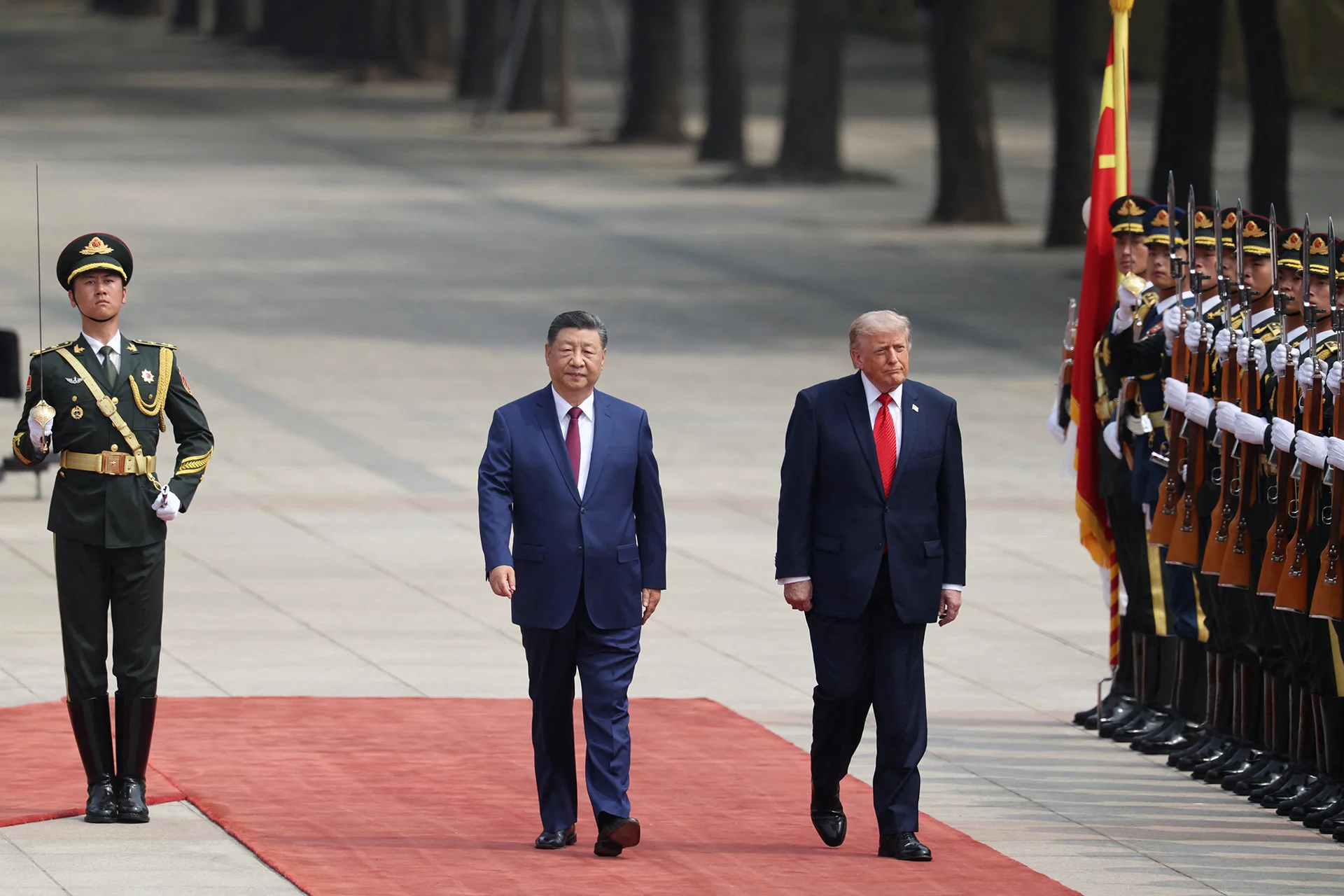
U.S. President Donald Trump has concluded his two-day summit with President Xi Jinping in Beijing. While Trump has been loudly proclaiming the acquisition of “historic” trade deals, observers note that behind the rhetoric, the U.S. President remained largely silent under severe warnings from Xi, with few concrete commitments achieved.
Although Trump claimed that China agreed to purchase 200 Boeing aircraft, both the aerospace giant and the Chinese government have declined to confirm the deal. Similarly, touted multi-billion-dollar agreements in agriculture and energy are being viewed skeptically by economists, who worry these may turn out to be nothing more than the “empty promises” reminiscent of Trump’s 2017 visit.
During the sessions, Xi Jinping reportedly issued a stern warning regarding Taiwan, asserting that failure to align with Beijing’s core interests could lead to “confrontation and conflict” with the United States. Trump’s failure to push back or offer any public response to this statement has drawn criticism from geopolitical analysts.
On the Middle East crisis, both leaders agreed on the necessity of keeping the Strait of Hormuz open. However, Trump’s subsequent remarks regarding the securing of Iranian uranium suggested that the move was motivated more by public relations than actionable policy.
The composition of the U.S. delegation was notable, featuring Trump’s son, Eric Trump, alongside tech billionaire Elon Musk.
Despite Trump’s optimistic framing of the summit, Asian stock markets reacted with nervousness and closed lower. South Korea’s Kospi index suffered a particularly sharp decline, tumbling 3.2%.
In summary, analysts suggest that Trump’s highly deferential posture toward Xi—coupled with his avoidance of journalists’ questions during the trip—highlights a stark narrative: a rising China in the East contrasted against a receding American influence. Meanwhile, long-standing human rights concerns, including U.S. appeals for the release of Hong Kong pro-democracy figure Jimmy Lai, saw no progress whatsoever.