


May 22, 2026 | Burma Independent Voice
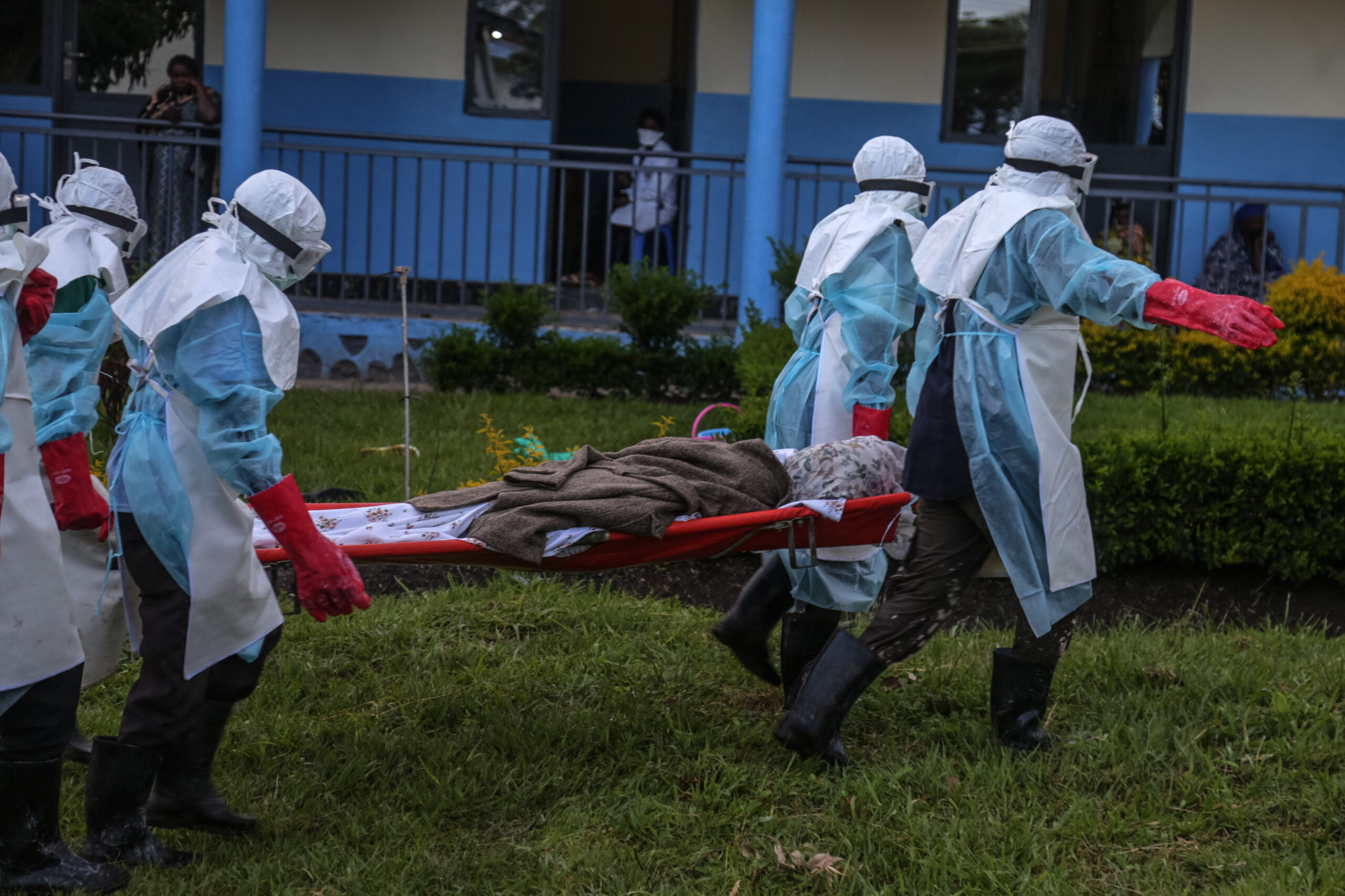
Frontline aid workers and healthcare professionals are pointing to pre-outbreak global health funding cuts, staff layoffs, and medical supply shortages implemented by the U.S. administration as key factors hindering containment efforts during a rapid surge of the Ebola virus in the northeastern Democratic Republic of the Congo (DRC).
According to updates from the World Health Organization (WHO), there are currently nearly 600 suspected cases and over 100 confirmed fatalities. The UN agency warned that the true scale of the transmission inside the DRC could be exponentially larger. Furthermore, the circulating strain is a rare variant for which no specific vaccine or treatment currently exists, suggesting it may have been spreading undetected for months.
The delay in early detection is partly attributed to the rarity of the strain, fragile rural healthcare infrastructure, and localized ethnic conflicts that disrupted initial screenings. However, public health experts argue that the primary bottleneck stems from the downstream consequences of U.S. President Donald Trump’s decisions to slash foreign aid funding and withdraw from the WHO.
While Washington has sought to deflect criticism, experts note that a series of four major U.S. funding cuts—freezing contributions to the WHO, dismantling the U.S. Agency for International Development (USAID), reducing budgets for the CDC, and slashing direct health assistance to the DRC and Uganda—have severely weakened the global pandemic response framework.
The International Rescue Committee (IRC) in the DRC stated that these funding rollbacks directly crippled early detection capabilities, thereby accelerating the virus’s spread. The IRC emphasized that years of underinvestment coupled with recent budget cuts have left frontline health workers without adequate personal protective equipment (PPE) and surveillance systems.
In contrast, a senior U.S. State Department official maintained that the Trump administration’s policy shifts did not disrupt the Ebola response. The official asserted that the U.S. responded rapidly once the pathogen was identified, noting that while USAID was dismantled, substantial funding and specialized personnel were preserved and reallocated.
Health officials confirmed that although the first related fatality occurred as early as April 20, the rarity of the Bundibugyo ebolavirus strain prevented local diagnosis. Samples had to be transported over 1,000 miles to a specialized laboratory in the capital, Kinshasa, delaying the official outbreak declaration until May 15.
While U.S. Secretary of State Marco Rubio placed the blame for the delayed detection squarely on the WHO, experts countered that U.S. funding withdrawals forced the agency to downsize its field teams, leaving a gap that no other donor country could immediately fill.
Although Washington has committed an initial $23 million and pledged to establish up to 50 medical clinics to combat the outbreak, relief organizations have criticized the response as tackling a massive crisis with “an incredibly small check,” stating that resources remain vastly inadequate.
Compounding future concerns, the U.S. administration reportedly plans to divert up to $2 billion from ongoing global health initiatives to cover the operational costs of shutting down USAID, a move observers warn will trigger even deeper shortfalls across international health sectors.