
May 4, 2026 | Burma Independent Voice
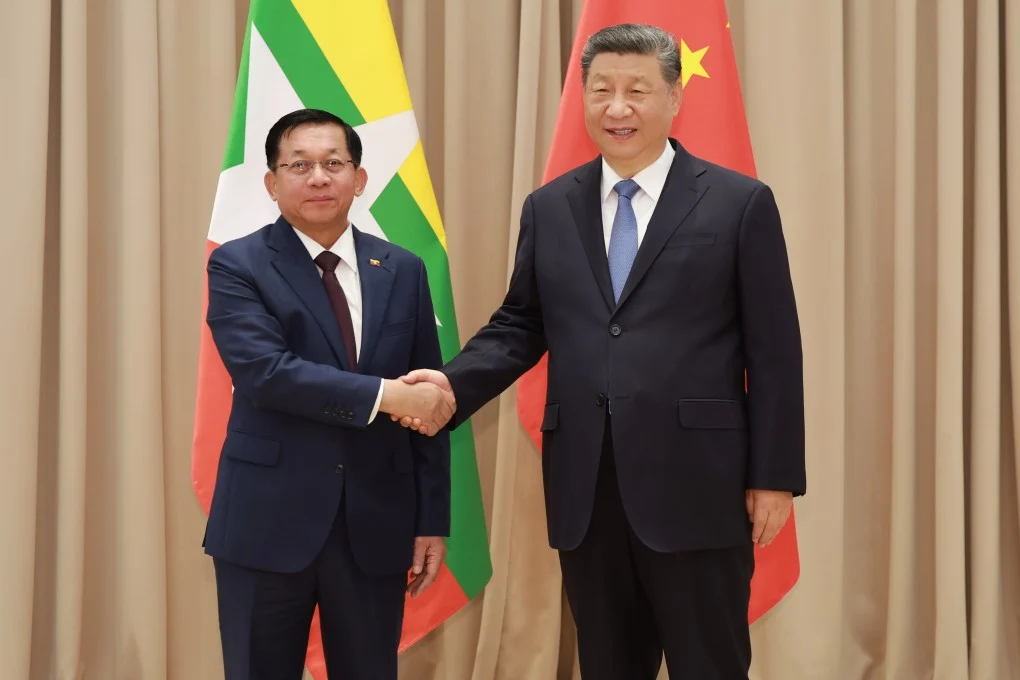
Since the coup, the Myanmar military junta has incurred significant political and military debts to China and Russia. According to an article by The Yomiuri Shimbun, this has led to a deepening dependency on these two nations, while their respective influences over Myanmar continue to grow simultaneously.
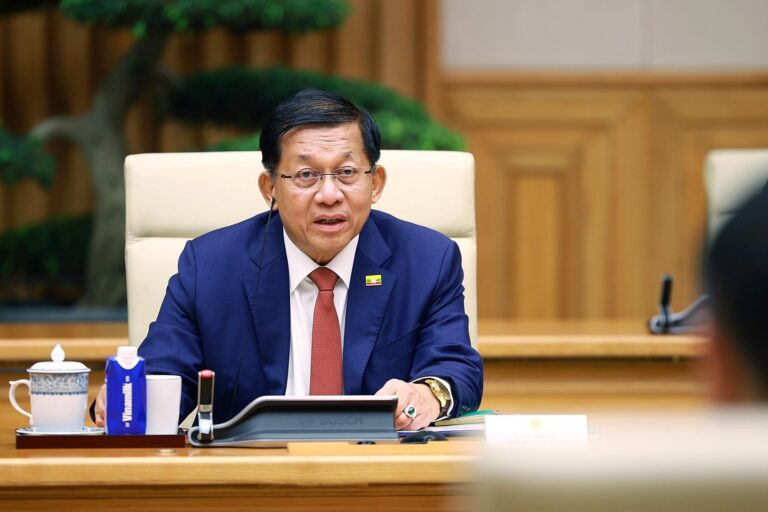
The ascent of coup leader Min Aung Hlaing to the presidency marks a further consolidation of power by the military bloc. Since 2021, the junta has steadily strengthened its alliance with China and Russia; consequently, monitoring the Myanmar situation now requires a focus not only on the struggle for democracy but also on the broader geopolitical ramifications for the Indo-Pacific region.
Diplomatic sources suggest that the ultimate goal of the coup was for the military to regain control over parliament, noting that Min Aung Hlaing has long harbored presidential ambitions. This current military-installed government differs fundamentally from the U Thein Sein administration of 2011. Former Japanese Ambassador Ichiro Maruyama observed that Min Aung Hlaing has built an “empire” comprised solely of his loyalists, suggesting there is “not even a 0.1 percent chance” of improvement, and predicting that suppression will only intensify.
The recent amnesty granted to President U Win Myint is widely viewed as a symbolic gesture aimed at gaining recognition from ASEAN and the international community.
China’s Strategic Intervention
In October 2023, the military suffered severe blows and lost strategic towns, such as Lashio in Shan State, to an offensive by ethnic armed organizations. China intervened to halt the offensive, utilizing its influence to prevent weapons from reaching ethnic forces via the Wa state (UWSA). Pressure was further applied through the closure of border gates, which cut off essential food supplies.
Having gained breathing room through China’s assistance, the junta enforced a mandatory conscription law to replenish its ranks. It also began a counter-offensive by adopting drone technologies previously utilized by revolutionary forces. Analysts suggest that without military aid from China and Russia, the junta would not have been able to conduct its elections last December.
China’s support for the junta is rooted in its own strategic interests. The pipeline networks for oil and natural gas, alongside railway and deep-sea port projects stretching from Kyaukpyu to Yunnan Province, provide China with a vital strategic route into the Indian Ocean, bypassing the Strait of Malacca.
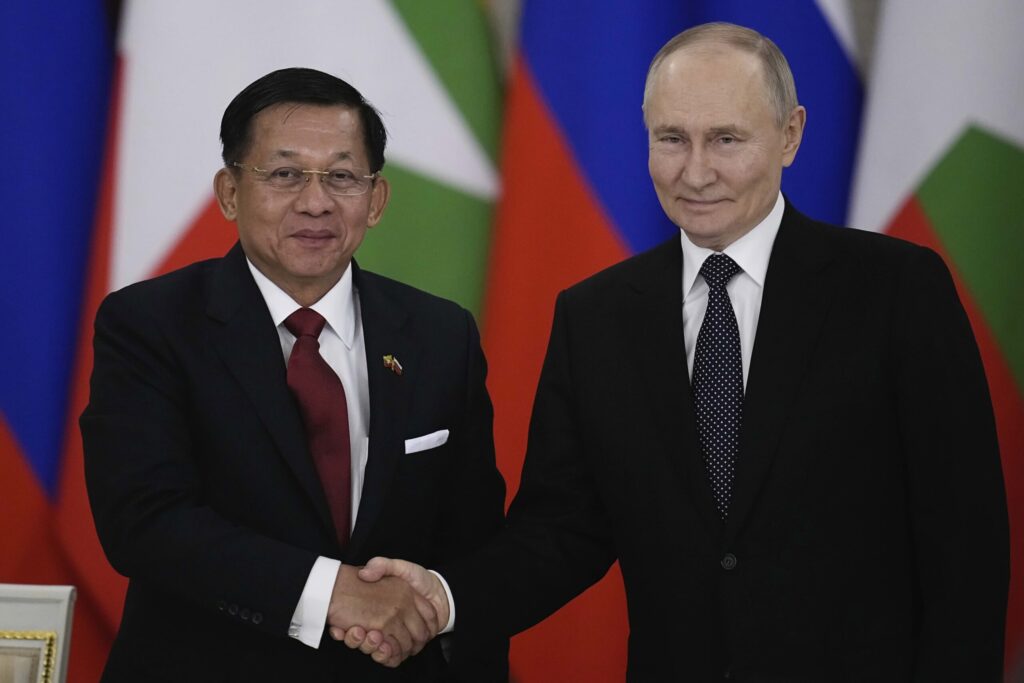
Russia’s Naval Foothold
Agreements with Russia have also raised significant alarms. Under a 2023 agreement, Russian warships are permitted to refuel and resupply at the Thilawa Naval Base near Yangon. The two navies have increased the frequency of joint exercises in the Andaman Sea and have signed further agreements regarding nuclear energy and space technology.
Min Aung Hlaing has also issued sharp criticisms of the “Quad”—comprised of Japan, the United States, Australia, and India—accusing the group of inciting conflict in the Asia-Pacific region.
Port projects in Kyaukpyu and Dawei are expected to become major geopolitical concerns for the Indo-Pacific. Specifically, observers warn that the Dawei port could serve as a military foothold for Russia to enter Southeast Asia.
In response, the U.S. Congress is preparing to impose sanctions on the Myanma Oil and Gas Enterprise (MOGE) and the Myanma Economic Bank (MEB) to cut off the junta’s financial lifelines. Experts suggest that Japan must also refrain from recognizing this government until genuine democracy is restored and should collaborate with the U.S. and ASEAN to establish new policies for regional stability.
About the Author