
May 10, 2026 | Burma Independent Voice
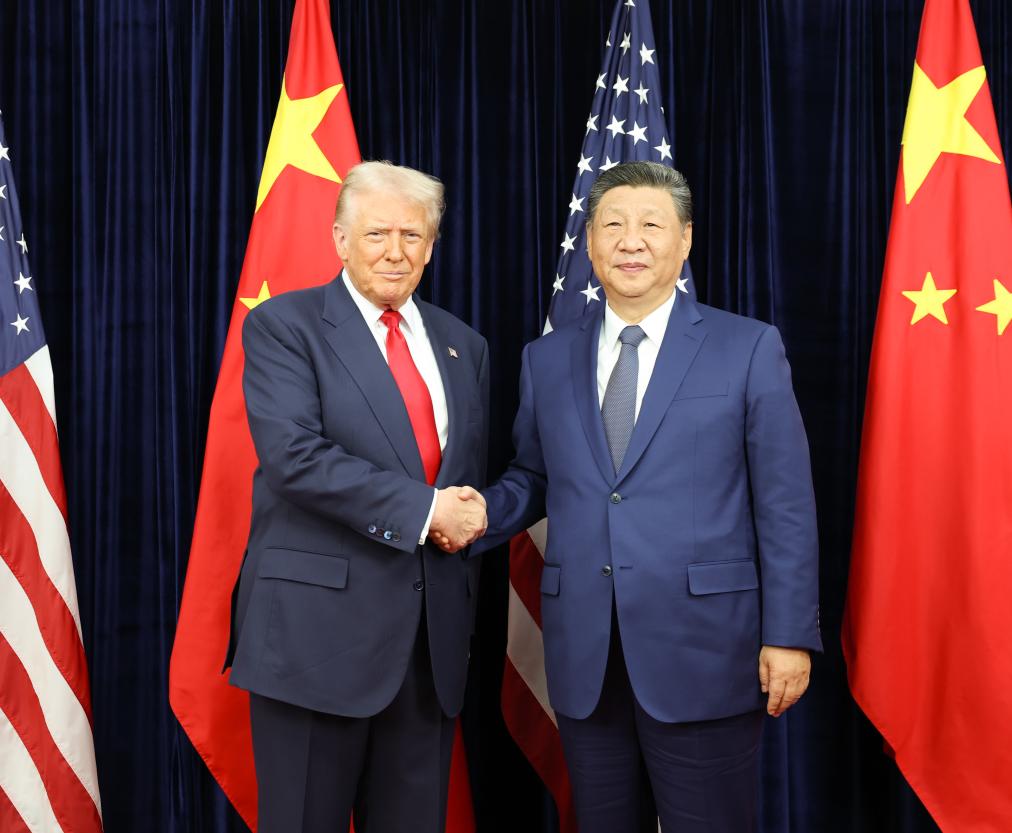
U.S. President Donald Trump is scheduled to travel to Beijing this week for a two-day summit with President Xi Jinping. However, Trump enters these talks from a position of perceived weakness, seemingly forced to seek Chinese assistance to resolve multiple crises exacerbated by his own policy decisions.
Facing mounting international criticism over conflicts in Ukraine, Gaza, and Iran, Trump is also struggling with declining domestic approval ratings as global fuel and food prices soar due to the standoff with Tehran. Consequently, he desperately requires the mediation of Xi Jinping—who holds significant influence over Iran—to navigate a way out of these self-inflicted dilemmas.
For Xi Jinping, Trump’s unpredictable maneuvers provide a strategic opening to reposition China as the new guardian of global stability. Furthermore, the diversion of U.S. military attention toward the Middle East has cleared a path for China to expand its influence within the Asian region.
International observers are particularly concerned that Taiwan may be used as a bargaining chip in exchange for China’s cooperation on the Iran issue. While Xi’s primary objective remains the reunification of Taiwan with mainland China, critics warn that Trump might compromise long-standing U.S. commitments to Taiwan to secure a deal on Iran or favorable trade terms.
Despite his usual rhetoric of being a “master of the deal,” Trump appears set to sit across from Xi in a vulnerable position. Analysts suggest that if he chooses to ignore the interests of key U.S. allies—including Taiwan, Japan, and South Korea—in favor of a short-term settlement on Iran, it could dismantle decades of American diplomatic credibility.
The upcoming visit remains under close scrutiny to determine whether it will signal a decline in U.S. global hegemony and effectively hand the mantle of world leadership to China.
About the Author