
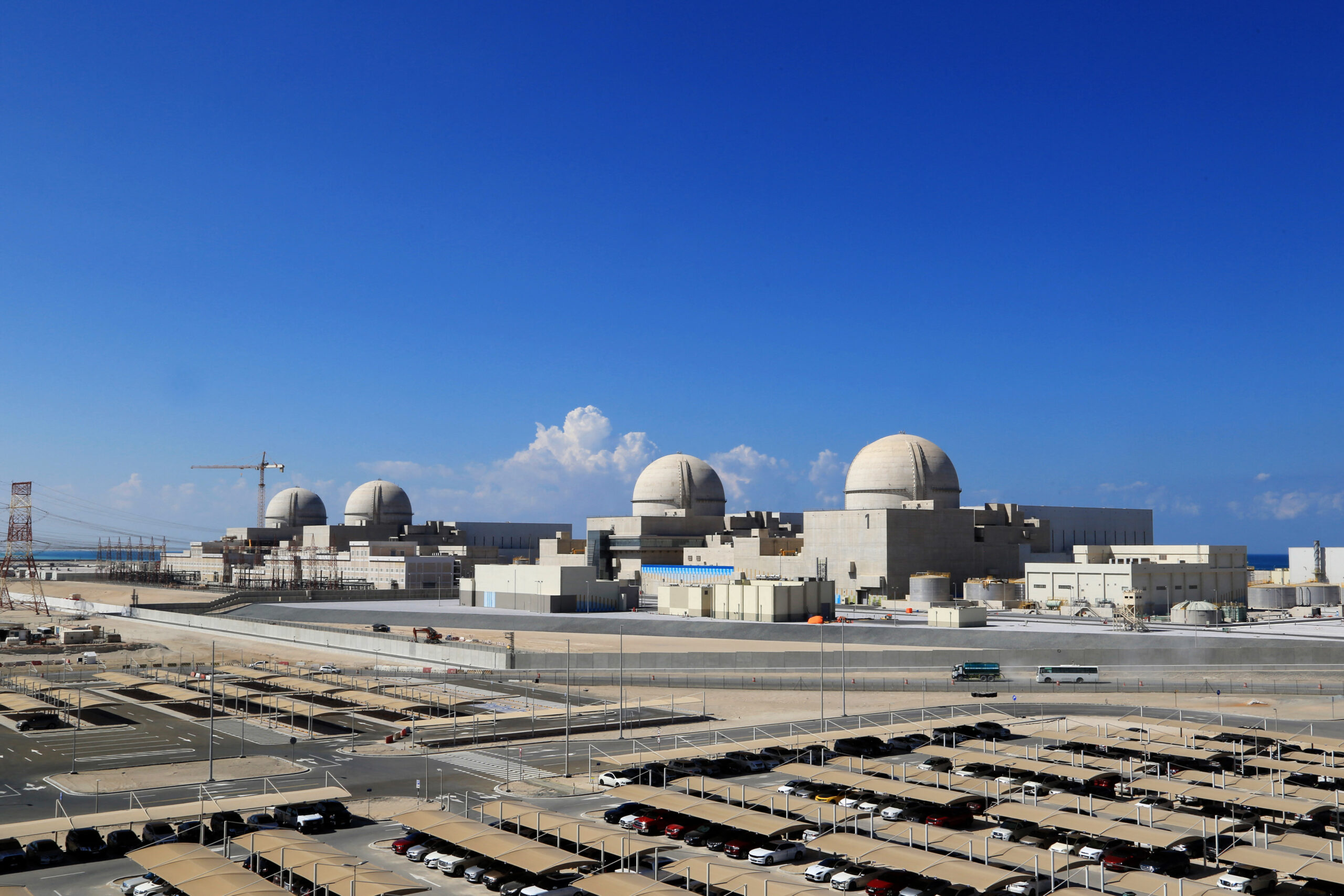
(FILES) A handout picture obtained from the media office of the Barakah Nuclear Power Plant on February 13, 2020 shows a general view of the power plant in the western Al Dhafra Region -formerly know as the Gharbiya region- of Abu Dhabi on the Gulf coastline about 50 kilometres west of Ruwais. A fire broke out following a drone strike on a nuclear power plant in the emirate of Abu Dhabi on May 17, 2026, authorities said, reporting no injuries or impact on radiation levels. "Authorities in Abu Dhabi responded to a fire incident that broke out in an electrical generator outside the inner perimeter of the Barakah Nuclear Power Plant in the Al Dhafra Region, caused by a drone strike," the Abu Dhabi Media Office wrote in a social media post. (Photo by Barakah Nuclear Power Plant / AFP) / RESTRICTED TO EDITORIAL USE - MANDATORY CREDIT "AFP PHOTO /Barakah Nuclear Power Plant" - NO MARKETING - NO ADVERTISING CAMPAIGNS - DISTRIBUTED AS A SERVICE TO CLIENTS
May 18, 2026 | Burma Independent Voice
A drone attack triggered a fire near a nuclear power plant in Abu Dhabi on Sunday, authorities announced. Officials confirmed that the incident caused no casualties and had no impact on radiation levels.
According to the UAE Ministry of Defence, three drones violated the country’s airspace from the western border. Air defense systems intercepted the threat, but one drone struck an electricity generator located just outside the inner perimeter of the Barakah Nuclear Energy Plant in the Al Dhafra region. An investigation is currently underway to determine the origin of the attack.
Anwar Gargash, diplomatic adviser to the UAE President, strongly condemned the assault on social media platform X, pointing toward Iran and its regional proxies. “Targeting the Barakah peaceful nuclear facility is a dangerous provocation, whether carried out directly by the principal culprit or through one of its proxy groups,” he wrote, adding that the act violated international law and showed blatant disregard for civilian lives.
Iran-backed armed groups equipped with drones are known to be stationed in neighboring Iraq, while Tehran’s Houthi allies in Yemen also possess operational military drones. The UAE Ministry of Foreign Affairs strongly condemned the unprovoked terrorist attack, stating that the nation will tolerate no threats to its security and sovereignty under any circumstances.
Following the attack, the UAE Foreign Minister held phone consultations with his counterparts from Qatar, Jordan, Saudi Arabia, Kuwait, Morocco, Egypt, and Bahrain. The regional ministers universally condemned the attack and supported the UAE’s full right to respond.
The Barakah Nuclear Energy Plant has been operational since 2020 and is located near the borders of Saudi Arabia and Qatar, roughly 200 kilometers (120 miles) west of the capital, Abu Dhabi. The facility supplies nearly a quarter of the oil-rich nation’s electricity needs. The Federal Authority for Nuclear Regulation (FANR) confirmed that the fire did not compromise the safety of the plant, and all operational units continue to function normally.
An official from the Korea Electric Power Corporation (KEPCO), which co-operates the facility, stated that the plant’s core components remained undamaged, though one nuclear reactor was temporarily shut down as a safety precaution. Rafael Grossi, head of the UN’s International Atomic Energy Agency (IAEA), expressed grave concern over the incident, condemning any military action that threatens nuclear safety as unacceptable.
Neighboring Saudi Arabia also condemned the attack as a threat to regional stability, pledging solidarity with the UAE in defending its sovereignty. Within the Arab world, the UAE is the first Arab nation to construct a nuclear power plant, following Iran’s established program.
Regional tensions have escalated significantly into a wider war since February 28, when U.S. and Israeli forces launched strikes inside Iran that killed several top Iranian leaders, prompting retaliatory strikes from Tehran. Iran has accused Gulf nations, including the UAE, of allowing U.S. forces to launch operations from their territories—an allegation the UAE has denied. Although the U.S. and Iran agreed to a ceasefire on April 8, intermittent attacks have persisted due to stalled peace talks.
About the Author