


Opinion Piece | By Kyawt Maung
More than five years after the military coup in Myanmar, the military-led government—arising from an election conducted entirely according to the military’s own will—is attempting to craft an image of a civilian government.
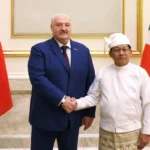
It is evident that the current administration, led by coup leader Min Aung Hlaing, lacks any representation of the Myanmar people. Instead, they are attempting to manufacture legitimacy through oppression, torture, and the rule of fear. Min Aung Hlaing has assumed the title of President and speaks as if this position carries a mandate from the people. Yet, the methods, the attitude toward the public, and the political intent of this administration remain unchanged from the earliest days of the coup.
One thing is certain: in terms of popular representation, the coup leader’s government is entirely illegitimate. In this context, a significant challenge emerges for the news media: How should they report on the events involving the Min Aung Hlaing administration? How should they refer to the coup leader and his government? How can they report without inadvertently granting legitimacy to this coup regime?
This has become an issue that independent media must consider with the utmost seriousness. In this article, I will not include media outlets like Popular News or VOM (Voice of Myanmar), which exist to stand by and propagandize for the military.
Journalists are expected to uphold ethics such as remaining neutral and reporting facts as they are. However, sometimes the concept of “neutrality” is exploited to give voice to oppressors and dictators, turning journalists into cogs in the propaganda machinery of criminals and autocrats.
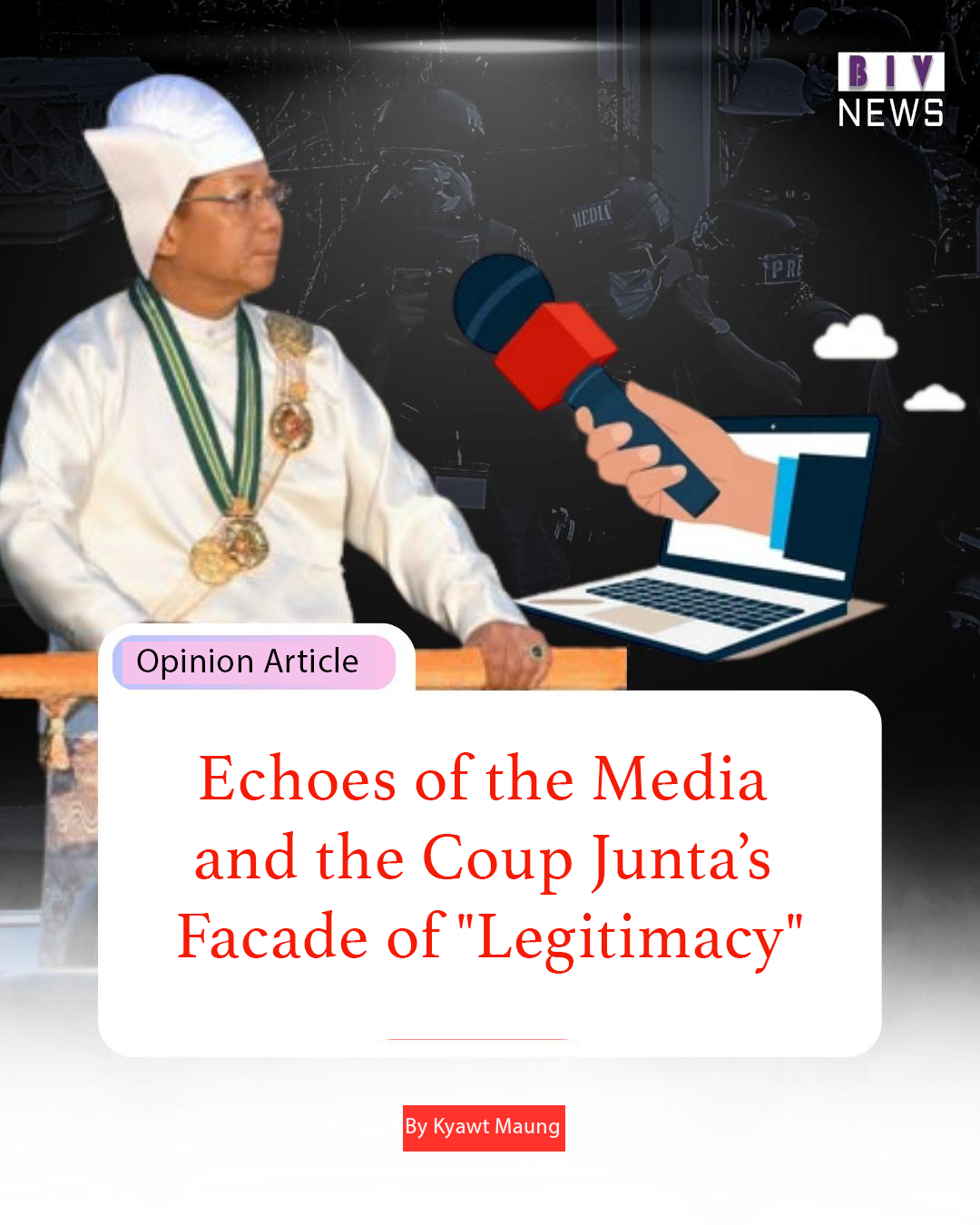
To put it plainly, if media outlets report the statements of the military-fabricated parliaments, governments, and the so-called President with the mere mindset that “it is news” or “reporting exactly what was said,” they are effectively serving as an echo chamber for the military dictatorship.
Reporting the announcements and actions of the military dictators by simply stating “they said this” without critical analysis turns the media into a free propaganda tool. It paves a smooth path for the coup military to pursue its quest for legitimacy.
Another point to be cautious of is the “normalization” of the situation for the public. By referring to the members of the government—who rose through an election manipulated by the military—using their formal names, titles, and actions as if they were a regular government, the media creates an illusion of a normal state of affairs.
When international media and some local outlets use terms like “President” or “Government,” they inadvertently lay the foundation for international diplomatic legitimacy. Media organizations must consider the profound political impact that their choice of terminology carries.
Deceptive claims and propaganda from the rebranded military government and parliament should only be presented as news after rigorous fact-checking. In reality, however, we see many independent media outlets producing news that focuses merely on what these military-constructed bodies are doing or saying.
We must not forget that today’s news events will become tomorrow’s historical records. The military seized power, arrested, tortured, and killed people, and burned down civilian homes. Despite these crimes against humanity, they are now posing as a civilian government elected by the people. Media outlets claiming to be neutral must avoid reporting in a way that suggests these are “normal” events. If today’s media reports are cited as history in the future, justice for the victims will be lost, while the perpetrators’ “legitimacy” will remain prominent.
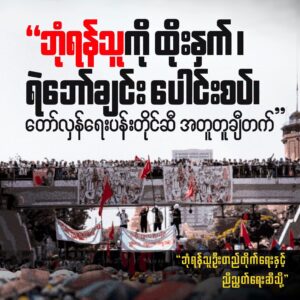
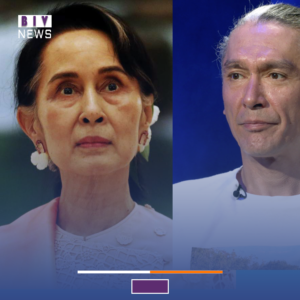
The late Nobel Peace Prize winner Archbishop Desmond Tutu once said that being neutral between the oppressor and the oppressed means choosing the side of the oppressor. This is a profound thought for journalists who echo the voices of oppressors and war criminals under the shield of being “professional and unbiased.”
Since the 2021 coup, journalists have been among those most persecuted by the military. To this day, there are journalists whom the military has arrested and imprisoned. Independent media cannot exist within the country; there is no freedom of the press, and they face various forms of oppression and restriction. It is nearly impossible to operate as a media outlet inside the country without being close to the coup military. These are the truths that exist today. Many journalists have had to flee abroad to continue their work.
Independent journalists remaining inside the country live under constant surveillance, even if they aren’t imprisoned. It must be realistically accepted that critiquing the coup military carries immense risk. However, on the other hand, echoing military actions and news more than necessary, voluntarily serving as a component of the propaganda machine, maintaining excessive proximity to sources within the coup apparatus, and reporting in a way that confuses the public leads to the question: “Who is professional journalism for?” Simply put, doing things that are unnecessary leads to becoming a free propaganda tool for the coup military without even realizing it.
Since the 2021 coup, professional journalism in Myanmar has faced many challenges. Specifically, journalism became blurred between the revolution and the emotions of the public. Popularity and emotion-based reporting have become more dominant than objective journalism. Some media outlets have begun choosing sides and individuals like political parties or political forces do.
The question of “which side are you on?” has begun to govern media outlets more than the facts or journalism itself. As international support has decreased, social media monetization strategies have also eroded journalism. Social media celebrities and YouTubers who ignore journalistic ethics for the sake of popularity, and the shift in some media outlets toward clickbait over ethics, have impacted the public’s trust in the media.
While reporters are the backbone of the media, most—except for a small elite and the privileged—have faced unemployment, downsizing, or the need to change careers. The main pillars of the media are gradually weakening. These are just a few of the many crises currently facing Myanmar’s media world and journalism. There are many broader challenges, and it is crucial to consider how to tenaciously uphold journalism and ethics amidst these crises.
It is vital to use journalism and media ethics to stand on the side of justice and expose wrongdoing. It is essential that media outlets do not “play it smart” with the concept of neutrality to provide a free echo for the dictators’ voices.
We must emphasize that journalism is not about acting as a recording device for those in power. As the military dictators try to build an image of a “government” representing the people, it is time to analyze whether the media is helping to construct that image.
Today’s news will be tomorrow’s history. In that history, if the perpetrators occupy the space of a legitimate government while the voices of the victims fade away, and if justice cannot be found for the oppressed, then journalists will bear that responsibility.
Although the media world is struggling amidst physical oppression, financial instability, and ethical blurring, these should not become excuses to transform the coup group’s “illegitimacy” into “legitimacy.”
In conclusion, no matter the crises and struggles the media faces today, they must always remember that journalism is not about popularity or being a component of a dictator’s propaganda.