



May 22, 2026 | Burma Independent Voice
SYDNEY — A groundbreaking study of ancient fossils in Australia has fundamentally challenged decades of scientific consensus regarding where Earth’s earliest complex organisms first thrived, revealing that these primeval lifeforms inhabited the oxygenated seafloor rather than floating near the ocean surface.
Long before the emergence of forests, fish, or dinosaurs, microscopic cells known as eukaryotes arose over a billion years ago, eventually serving as the evolutionary ancestors to all plants, animals, and fungi. For years, scientists sought to pinpoint the exact habitats of these ancient cells. The new findings reveal that these organisms did not drift freely as open-ocean plankton but were instead strictly bound to oxygen-rich patches of the primordial seabed.
The Crucible of Complex Life
Around 1.7 billion years ago, Earth’s oceans were heavily dominated by simple microbes and bacteria. The emergence of eukaryotes—distinguished from bacteria by their complex cell membranes, a distinct nucleus, and energy-producing mitochondria—marked one of the most critical evolutionary leaps in the history of life. However, due to the extreme scarcity of intact fossils from that era, mapping their exact ecological niches had long remained an elusive task.
“The earliest eukaryotes we have found so far already required a certain amount of oxygen,” explained Leigh Anne Riedman, a paleontologist from the University of California, Santa Barbara (UC Santa Barbara). “By analyzing the distribution of these fossil samples, we have scientifically demonstrated that they thrived directly on the seafloor or nestled within benthic mats.”
To unlock this evolutionary mystery, researchers cross-analyzed rock fossils, sediment data, and chemical signatures dating between 1.75 billion and 1.4 billion years old. The fieldwork centered primarily on the McArthur and Birrindudu basins in Australia’s Northern Territory, a region that existed as shallow coastlines and marine lagoons 1.7 billion years ago.
An Anoxic World
During this ancient epoch, Earth’s atmospheric oxygen levels hovered at a mere $1\%$ of modern levels. “This was not an environment where humans could have survived or breathed,” noted research team member Susannah Porter. Consequently, the primordial oceans were starkly divided into distinct zones with and without oxygen.
The research team’s pivotal discovery showed that these eukaryote fossils were entirely absent from ancient marine sediments that lacked oxygen. Instead, they were found exclusively in areas corresponding to oxygenated seafloors, providing empirical evidence of their absolute survival dependence on oxygen.
The critical evidence lies in the fossil distribution pattern. If these primitive organisms had floated freely near the ocean surface like modern plankton, their microscopic remains would have uniformly rained down across the entire ocean floor upon death, appearing in both oxygenated and anoxic sediments alike.
However, because the fossils were recovered strictly from oxygen-rich benthic zones, scientists concluded that these organisms did not drift in the open waters but spent their life cycles anchored to the seafloor.
The Leap That Reshaped Earth
According to the study, this evolutionary stalemate persisted for hundreds of millions of years. It was only during the Neoproterozoic Era—between 1,000 million and 540 million years ago—that a major shift occurred, allowing these cells to finally migrate into the open, pelagic waters and diversify into free-floating plankton.
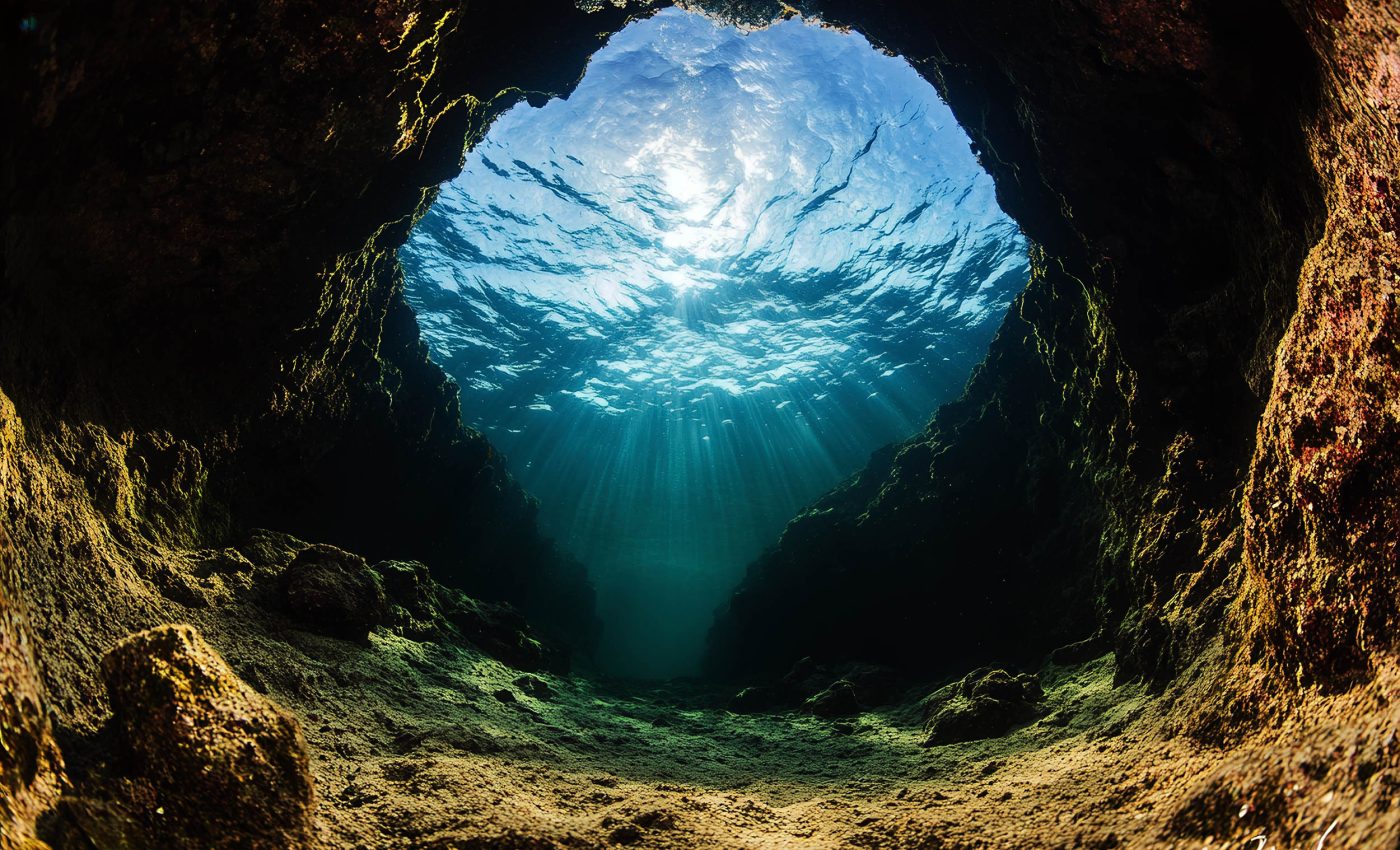
The study underscores a harrowing reality for early complex life: these microorganisms endured for millions of years in isolated, oxygenated pockets of the seafloor while the vast majority of the global ocean remained suffocatingly anoxic.
The eventual migration of these microscopic benthic communities into the open oceans permanently altered Earth’s biosphere. The study, published in the prestigious scientific journal Nature, highlights that this pivotal transition paved the way for the eventual emergence of coral reefs, vast forests, and complex multicellular life, including mammals and humanity.