


June 14, 2026 | Burma Independent Voice၊ Report
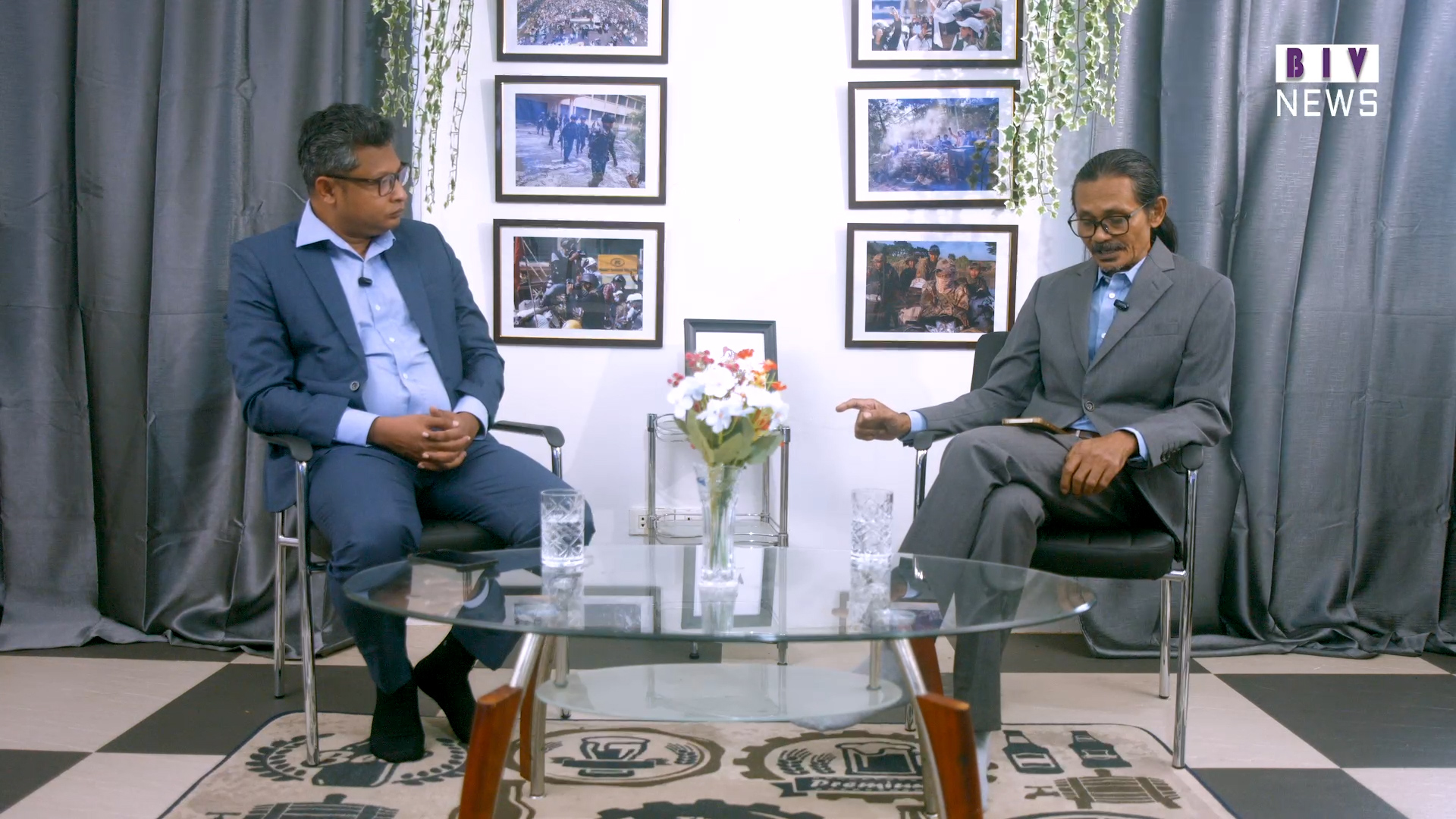
In a newly launched collaborative broadcast, Discussions on Myanmar’s Affairs, jointly produced by BIV News and the A Time With Kyaw Kyaw Thein YouTube channel, Aung Ko Ko, Executive Director of Mosaic Myanmar, offered a critical assessment of Myanmar’s current peace landscape, the military’s continued dominance over peace initiatives, and the challenges facing revolutionary forces in articulating a long-term vision for sustainable peace.
According to Aung Ko Ko, the peace initiatives advanced by the military following the 2021 coup have largely failed to contribute to meaningful conflict resolution. Instead, they have functioned primarily as political instruments aimed at consolidating the military’s authority. As a result, the pre-coup peace architecture, including the Nationwide Ceasefire Agreement (NCA), has lost much of its relevance in a dramatically transformed political and military environment.
Although the junta’s National Solidarity and Peacemaking Negotiation Committee (NSPNC) recently held talks with seven NCA-signatory Ethnic Armed Organizations (EAOs), Aung Ko Ko argued that the discussions produced little substantive progress. The participating groups are largely removed from the main fronts of armed resistance, while major anti-junta forces remain outside the process. Consequently, there is little prospect that the current dialogue framework can generate a comprehensive political settlement.
Reflecting on Myanmar’s history, Aung Ko Ko noted that peace processes have long been dominated by successive military regimes. Yet decades of recurring armed conflict demonstrate that agreements negotiated primarily between military elites have not produced durable peace. Previous peace initiatives often suffered from a lack of broad public participation and legitimacy, with conflict-affected communities, displaced populations, women, and other marginalized groups largely excluded from decision-making processes.
He further observed that civil society organizations currently face severe restrictions and possess limited opportunities to contribute to peacebuilding efforts. At the same time, while resistance forces frequently emphasize the goal of establishing a federal democratic system, discussions about peacebuilding and post-war coexistence remain comparatively underdeveloped.
Aung Ko Ko argued that the National Unity Government (NUG) and the National Unity Consultative Council (NUCC) have articulated important political principles, including federal democracy, transitional justice, and civilian oversight of the armed forces. However, he suggested that these principles have yet to be translated into detailed and publicly accessible implementation strategies capable of guiding post-conflict reconstruction and national reconciliation.
If revolutionary forces reject the military’s peace framework, he contended, they must eventually develop an alternative peace process of their own. Such an undertaking, however, faces significant challenges, including shortages of financial resources, technical expertise, and institutional capacity.
Looking ahead, Aung Ko Ko called for a broader rethinking of how peace is understood in Myanmar. Rather than treating ceasefires as the starting point for political dialogue, he suggested that stakeholders should first work toward a shared political understanding of the country’s future. In his view, a sustainable peace process should be guided by three fundamental questions: Who is peace for? What problems is peace intended to address? And who should participate in building it?
Ultimately, he argued that peace must be understood not simply as the absence of armed conflict, but as a long-term political project aimed at creating a more inclusive, equitable, and democratic society. For Myanmar’s revolutionary movement, this means preparing not only for military and political change, but also for the complex tasks of constitutional development, national reconciliation, and rebuilding public trust.
Rejecting the junta’s peace initiatives alone is insufficient; lasting peace will depend on the ability of democratic and revolutionary forces to articulate and implement a credible, inclusive, and people-centred vision for Myanmar’s future.