
By Kyaw Maung | June 24, 2026 | Burma Independent Voice (BIV)
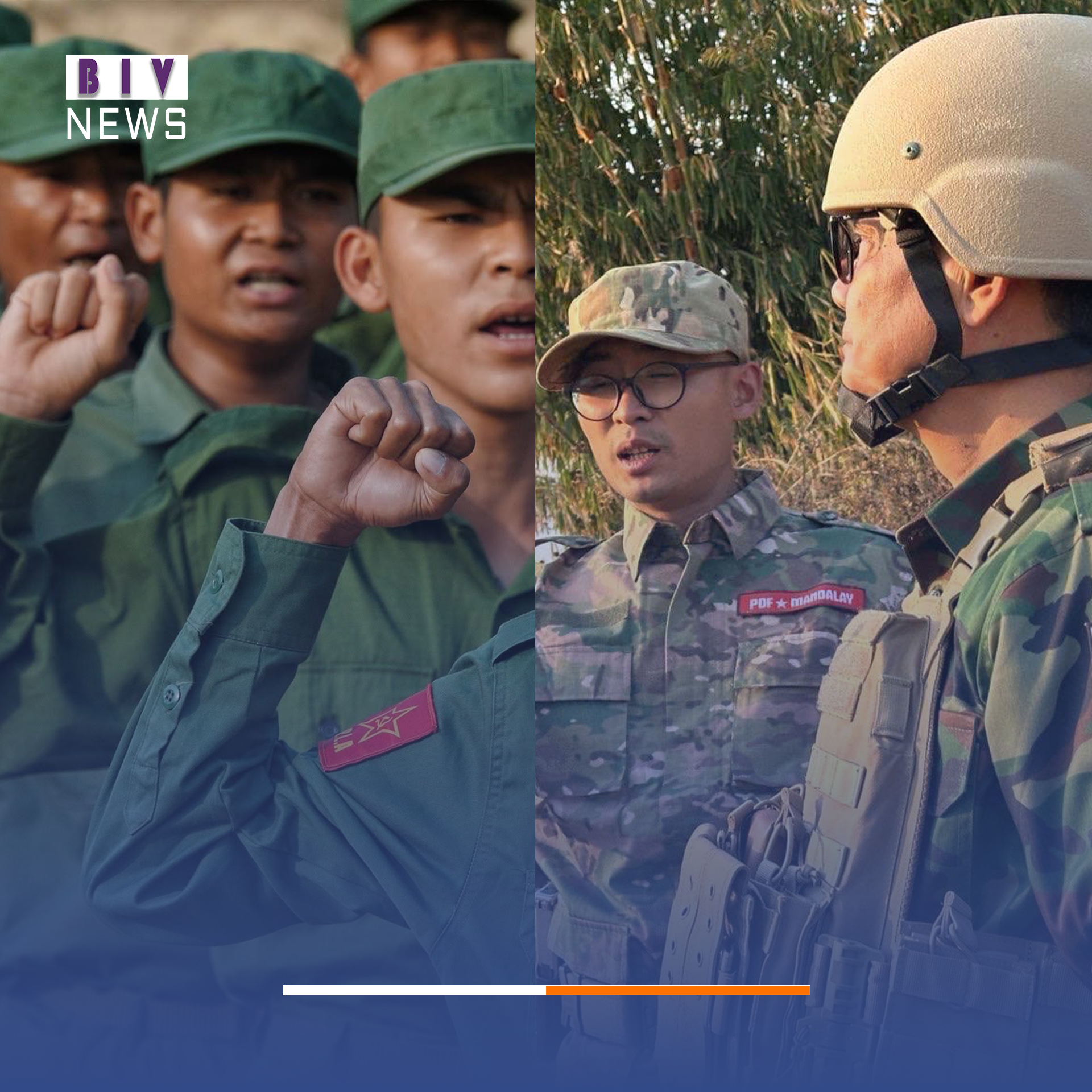
In the armed struggle against the military dictatorship in Myanmar, a fundamental yet deceptive question consistently emerges: why are revolutionary forces, despite sharing a unified common enemy, struggling to establish a cohesive coalition, and why are internal conflicts proliferating among forces actively fighting the Myanmar military? While seemingly straightforward, this inquiry exposes a highly complex matrix of ground realities rooted in deeply entrenched structural and historical factors. The escalating military and political friction between forces operating under the National Unity Government (NUG) and the People’s Liberation Army (PLA)—the armed wing of the Communist Party of Burma (CPB)—renders a profound academic and strategic diagnosis absolutely imperative. This phenomenon is not entirely unprecedented, as mirrored in prior historical frictions involving groups like the Student Revolutionary Force (SRF) and various independent Sagaing-based People’s Defense Forces (PDFs). Each iteration of inter-revolutionary tension triggers divergent interpretive paradigms and highly polarized strategic narratives among respective sympathetic factions.
On one side of the discourse, critics construct a narrative alleging that the National Unity Government (NUG) systematically seeks the structural dismantling or absorption of revolutionary units that refuse to integrate into its formalized Chain of Command (COC). Conversely, an opposing narrative posits that the proliferation of fragmented, autonomous factions fundamentally undermines unified strategic command, induces localized warlordism, interferes with grassroots administration, and imposes unsustainable socioeconomic burdens upon civilian populations. In the specific case of the PLA, despite its active combat operations against the military junta, its organizational identity as the armed wing of the Communist Party of Burma has drawn vitriolic attacks branding the group as a geopolitical proxy of Beijing. While sociological and political relations among armed actors naturally fluctuate, analyzing why groups confronting an existential common enemy expend critical combat resources on fratricidal confrontation presents a complex paradox. The opportunity costs of inter-revolutionary friction are catastrophic, directly degrading the collective operational capacity required to dismantle the military junta. In this precarious environment, the efficacy and availability of localized mediation mechanisms and institutional conflict-resolution bodies become paramount. Historical precedents, such as the dynamics among Syrian Islamist opposition factions, demonstrate that institutionalized dispute-resolution frameworks can effectively contain fratricidal violence to brief, localized escalations.
Comparative conflict research validates that while inter-factional fighting is an undeniable reality of civil wars, it historically constitutes only a minor percentage of overall revolutionary military operations. Such clashes are rarely continuous, occurring sporadically in concentrated geographic pockets dictated by fluctuating battlefield conditions. Internal friction often erupts even among groups sharing identical structural objectives when they diverge on ideological pathways, post-war visions, tactical recruitment, or competition over scarce material resources. Stated conversely, while the immediate objective of overthrowing an authoritarian regime provides a temporary focal point, divergent doctrines regarding the structural architectural layout of the future state consistently generate profound ideological schisms that impede durable coalition building. Empirical conflict theories suggest that armed factions are most prone to engage in fratricidal violence when the opportunity costs of deflecting focus away from the primary state enemy decline. This behavioral shift typically manifests under two diametrically opposed conditions: first, during periods of significant revolutionary victory where state military pressure recedes, prompting factions to aggressively contest the distribution of post-victory political spoils and territorial control; and second, during phases of potential existential defeat where factions cannibalize one another to secure individual organizational survival and localized dominance.
As prolonged civil conflicts endure, the competition over economic infrastructure and organizational survival frequently transforms armed factions into predatory entities seeking to absorb weaker rivals—a structural byproduct of prolonged warfare. This dynamic is further aggravated by power asymmetry among contemporary resistance organizations. Grounded in established theories of intra-rebellion dynamics, militarily dominant groups operating in contiguous or overlapping territorial zones frequently execute systematic strategies to subjugate, absorb, or entirely liquidate ideologically divergent, weaker factions. Political economy and conflict strategy research demonstrates that when multiple armed actors operate within identical or adjacent operational theaters, they inevitably engage in resource conflicts to monopolize lucrative economic revenues necessary to sustain long-term military mobilization and logistical self-sufficiency. If internal dispute-regulation mechanisms are absent or collapse during these critical junctions, the consequences culminate either in the absolute liquidation of weaker revolutionary units or the structural balkanization of the broader resistance movement. When institutional actors prioritize localized administrative dominance and territorial sovereignty over the collective objective of defeating the common enemy, the conflict spiral inevitably accelerates toward fratricide.
These battlefield tensions are acutely exacerbated and accelerated by the contemporary digital information ecosystem, specifically through the provocative commentary of social media influencers. When highly sensitive frontline incidents transition into the digital public square, online personalities frequently engage in partisan amplification without possessing verifiable, comprehensive granular knowledge of the ground reality. Consequently, while institutional leaders from both factions attempt to negotiate diplomatic de-escalation, the vitriol, public shaming, and digital polarization engineered by online influencers strip leadership figures of the political space required to make strategic concessions for the collective public good, forcing them instead toward armed escalation. Although structural research indicates that intra-factional disputes can be contained via localized traditional mediation, digital hyper-polarization severely disrupts these delicate negotiations. In modern warfare, the information and propaganda sphere constitutes a critical strategic theater, uniquely magnified in the digital era through highly sophisticated, systematic psychological operations. While propaganda warfare is conventionally directed against the primary state enemy, the current trajectory raises troubling questions as to whether the NUG’s information apparatus is strictly focused on the military junta or is being counter-productively redirected inward against parallel revolutionary factions through extensive narrative manipulation on digital networks.
During phases of institutional friction or tactical misunderstanding, the role of official institutional spokespersons becomes strategically vital. These designated officials bear the absolute burden of institutional accountability to disseminate verified, accurate information. However, the current Myanmar resistance landscape features a destabilizing proliferation of unauthorized, ambiguous actors projecting narrative authority in lieu of official channels. This creates profound ambiguity regarding the mandate and legitimacy of those constructing dominant public narratives. It remains unclear whether these individuals operate as partisan influencers or as privileged actors possessing asymmetric access to sensitive internal data. Consequently, influencer-driven narratives routinely overshadow official institutional communications, rapidly permeating a populace characterized by limited media literacy. Rather than facilitating reconciliation, this environment structurally impedes dispute resolution. The convergence of resource competition, severe power asymmetry, and irresponsible digital narrative construction ensures that these conflicts cannot be reduced to superficial disputes. The onus of managing these volatile dynamics rests heavily upon the senior leadership of all revolutionary organizations, who must view inter-factional friction not as isolated incidents, but as an existential systemic crisis requiring institutionalized collective management.
Moving forward, resistance organizations must establish rigorous, accountable protocols for disclosing operational facts to the civilian populace and independent media. Factions must move beyond single, defensive press releases and actively avoid inflammatory rhetoric that deepens structural polarization. If the immediate formulation of a singular, monolithic military alliance remains unfeasible, it is absolutely critical to proactively codify comprehensive non-aggression pacts, explicit codes of conduct, and mutually respected territorial demarcation ethics. The current escalation underscores an urgent, existential necessity for the immediate establishment of a Joint Dispute Resolution Body—a mutually recognized mediation mechanism and legal framework capable of resolving inter-factional crises through institutional adjudication rather than armed conflict. Should the resistance fail to urgently operationalize these internal mediation systems and continue to prioritize digital propaganda warfare over institutional diplomacy, the revolutionary forces will inevitably drift toward catastrophic internal bloodshed. The ultimate consequence of such a failure will be the total fragmentation of the democratic revolution, leaving vulnerable civilian populations, women, and children permanently displaced and insulated from genuine justice, trapped within a conflict where a sustainable solution remains tragically elusive.
About the Author