
May 28, 2026 | Burma Independent Voice (BIV)
BANGKOK, Thailand — Thai law enforcement authorities have dismantled a brutal human trafficking network operating in Bangkok, arresting three Myanmar nationals accused of trafficking, enslaving, and physically abusing young Myanmar migrant children, Thai media reported on May 27.
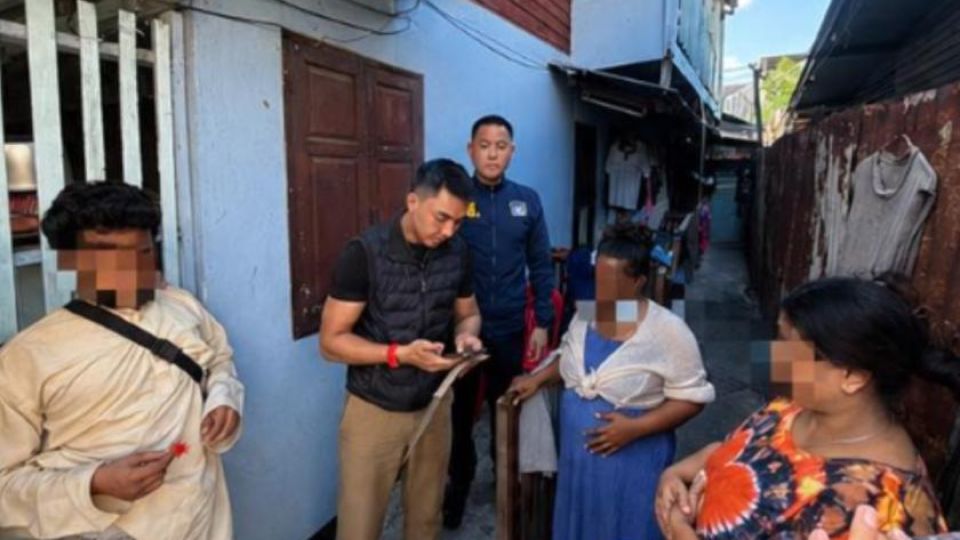
According to official dispatches from Thailand’s Channel 7, the Bangkok Post, and the Children and Women Protection Division (CWPD), authorities executed a coordinated raid on May 26, 2026, targeting a residential safehouse in Bangkok’s Suan Luang district.
The investigation was initiated after plainclothes police officers spotted a vulnerable 6-year-old Myanmar child selling flowers and candy late at night outside restaurants and entertainment venues in the capital.
12-Hour Shifts and Physical Abuse
Interrogations and forensic screenings revealed that the 6-year-old victim was forced to work grueling 12-hour shifts daily, from 3:00 PM until 3:00 AM the following morning, without rest.
According to case files, if the child failed to meet the syndicate’s strict daily sales quotas, the handlers routinely subjected them to severe beatings and food deprivation. Upon rescue, medical personnel discovered that the child had also sustained a fractured arm.
Following the initial discovery, investigators traced the child’s handlers back to a rented apartment in Suan Luang. A subsequent raid uncovered an additional five Myanmar migrant children. All five showed signs of physical trauma and reported being subjected to identical 12-hour forced labor regimens. In total, six children have been successfully liberated from the compound.
Socio-Economic Vulnerabilities and Embassy Silence
The three arrested suspects have been identified as Ma Soe Soe, Ma Hnin Win, and U Soe—comprising two women and one man, all Myanmar citizens.
During initial interrogations, the suspects denied all allegations of physical assault, claiming the victims were relatives brought to Bangkok solely for employment purposes.
Despite their denials, Royal Thai Police have formally charged all three suspects under the Anti-Human Trafficking Act, the Child Protection Act, and the Begging Control Act. All six rescued children have been transferred to specialized shelters operated by the Ministry of Social Development and Human Security (MSDHS) for rehabilitation and psychological support.
Child rights advocates have repeatedly warned that the escalating political and economic instability in post-coup Myanmar has left children from ethnic minority regions exceptionally vulnerable. Severe poverty, lack of documentation, and a total collapse of the domestic education system have turned these children into primary targets for cross-border trafficking cartels.
While Thai authorities have launched repeated crackdowns on child syndicates operating across major tourist hubs like Khao San Road, completely eradicating these networks remains an elusive challenge. To date, there has been no public statement or indication of bilateral cooperation from the Myanmar Embassy in Bangkok regarding the protection or repatriation of these rescued citizens.
About the Author