
April 11, 2026 | Burma Independent Voice (Fact Check)
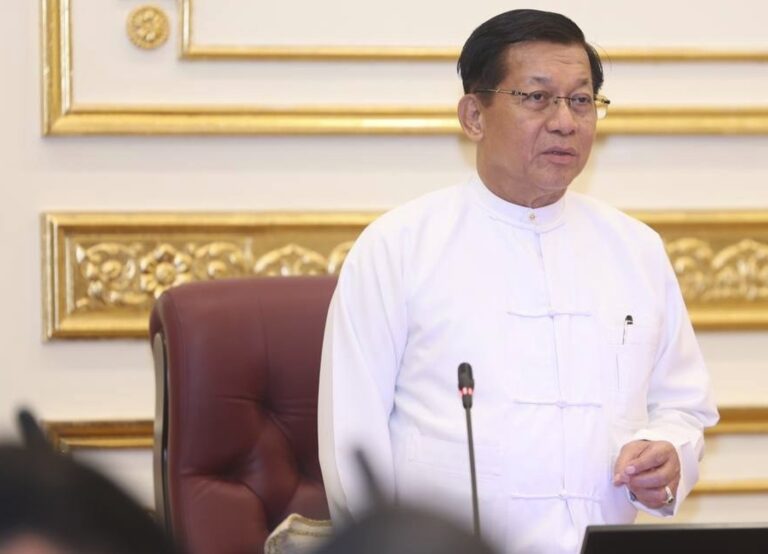
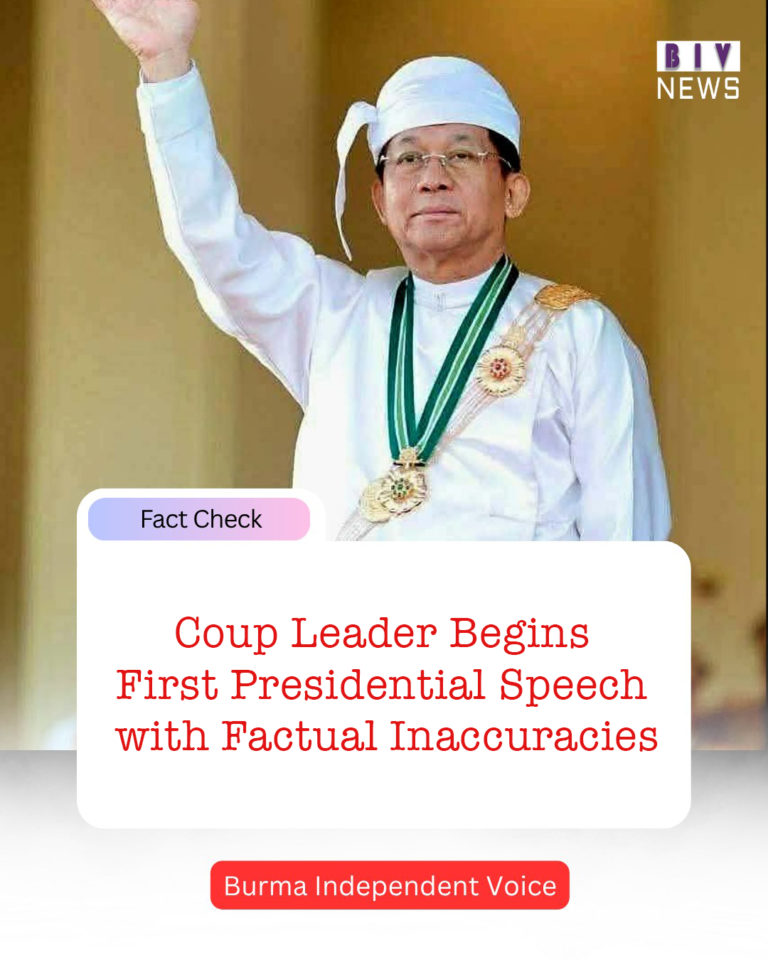
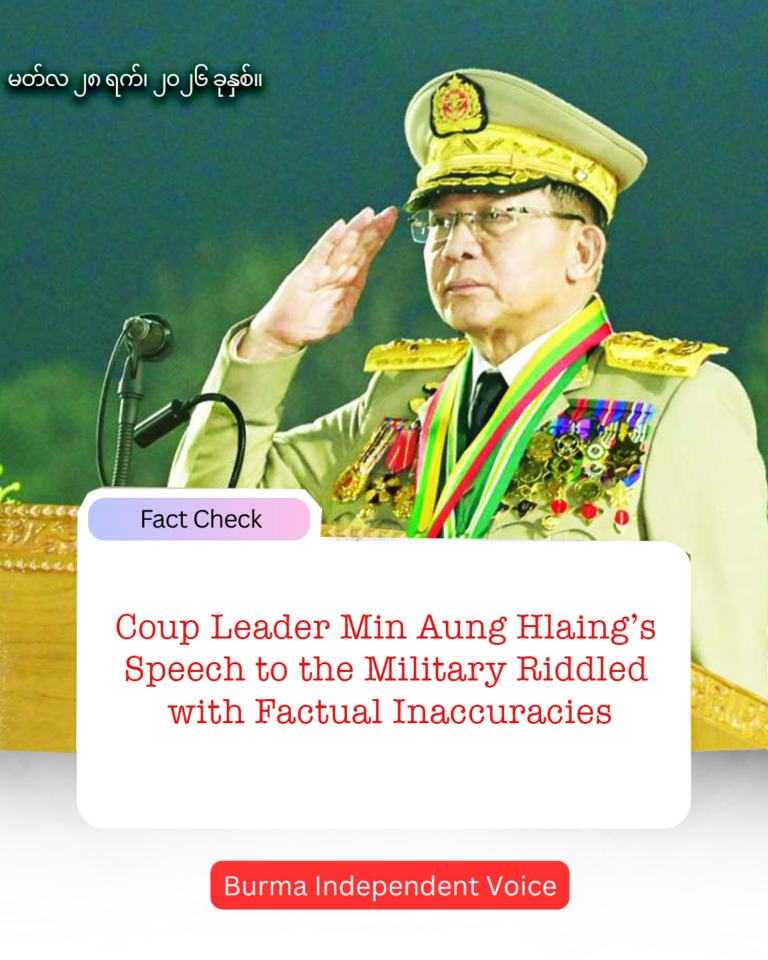
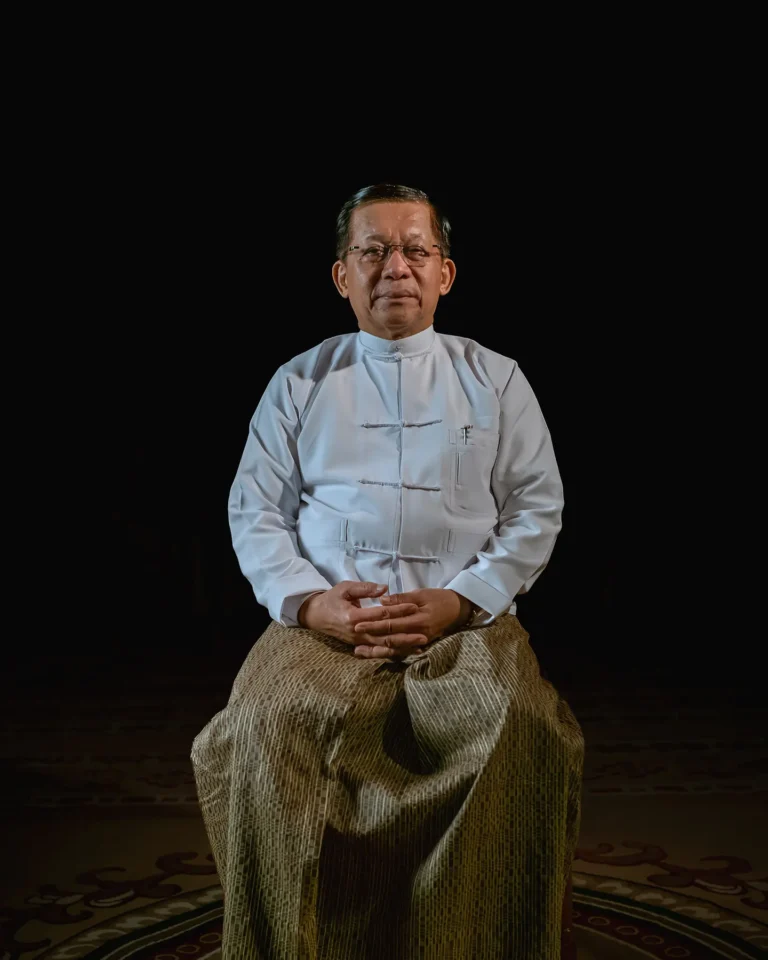
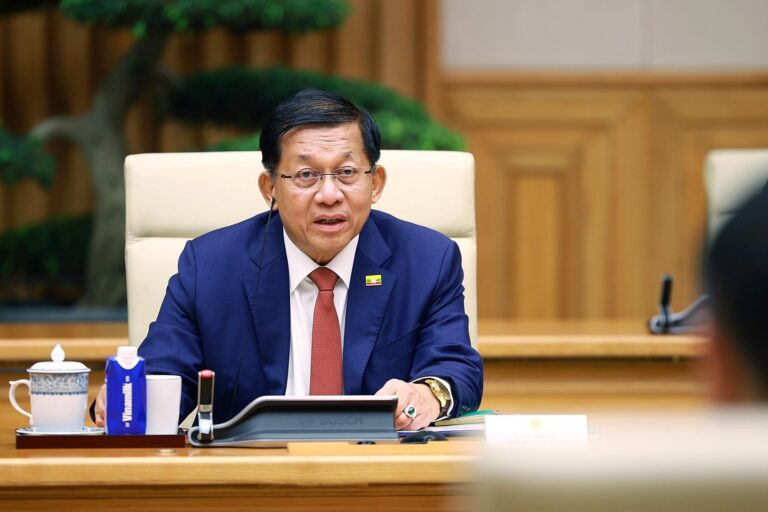
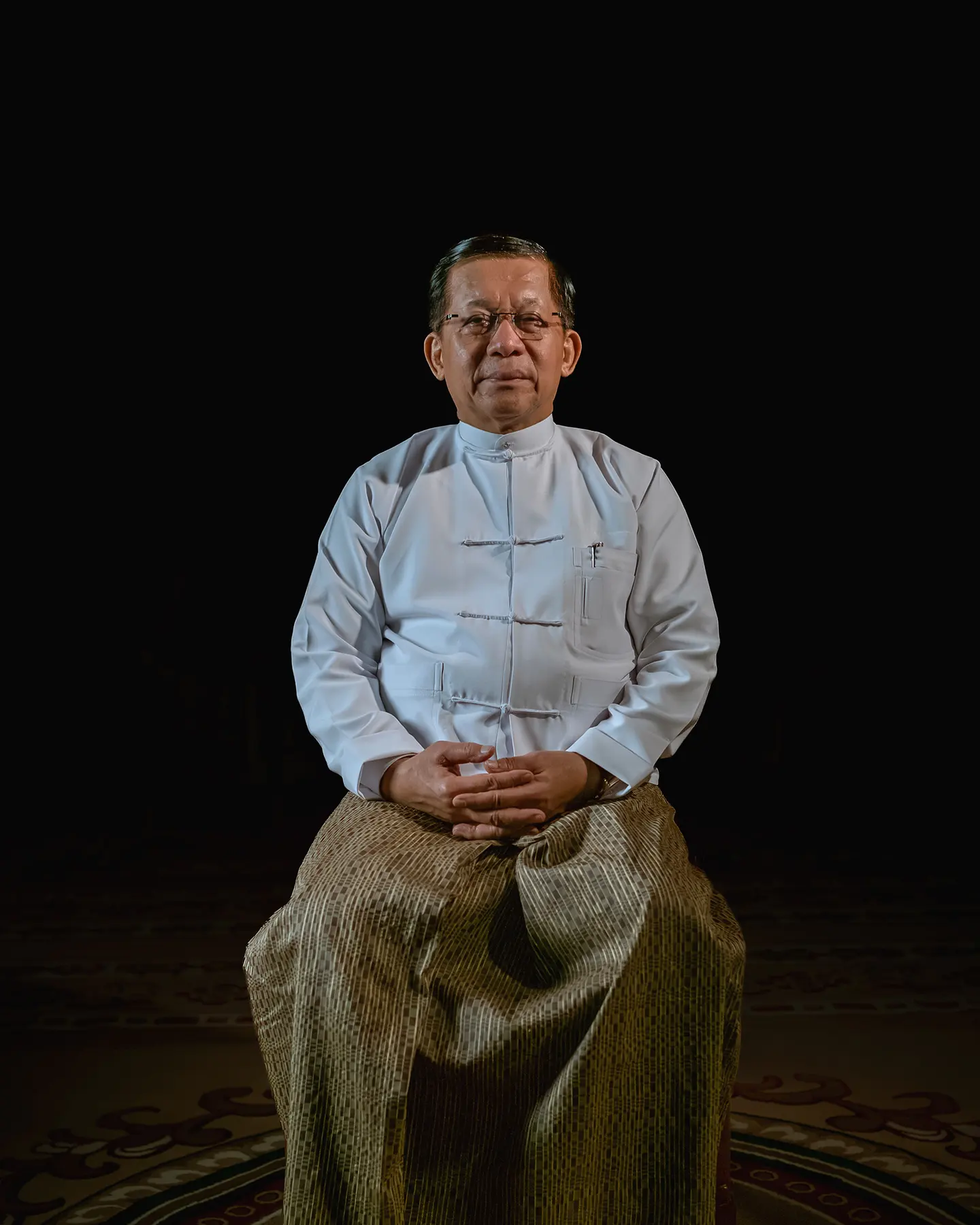
Coup leader Min Aung Hlaing made several factual inaccuracies during an interview with Time Magazine, a fact-check by BIV has revealed.
Following the interview with the coup leader, Time Magazine published an article titled “Min Aung Hlaing Wants to Rebuild Relations with the West.” The military junta subsequently condemned Time Magazine for failing to publish the full transcript of the interview. Following this, the military junta’s propaganda media outlets released what they claimed to be the full transcript of coup leader Min Aung Hlaing’s responses.
An analysis of the full interview reveals that the coup leader’s answers strayed significantly from the truth, incorporating factual inaccuracies and propaganda.
Claim 1: Fraud in the 2020 General Election and Action Against Daw Aung San Suu Kyi
Coup Leader’s Statement:
“We made various efforts to prevent reaching this situation. However, it reached this point nonetheless. Regarding her age, there are matters we have taken action on. We took action on criminal matters, which were clearly evident. The primary issue she started was trying to win the election through unfair means. It was quite severe. General elections are the very lifeblood of a democracy. So, unfair practices were used in the election. When I took responsibility in 2021, all the inspection findings were posted on our website. Electoral fraud exceeded 30 percent. It was truly severe, making it one of the most disgraceful elections in the country’s democratic history. That is why we had to take action against her.”
Fact Check: This is false.
Both domestic and international election monitoring organizations reported that the 2020 general election was free and fair. The international community also recognized the election as representative of the people’s will.
The People’s Alliance for Credible Elections (PACE) released its final monitoring report on March 16, 2021. While the report noted administrative weaknesses and irregularities, it concluded that these did not have an impact capable of changing the overall election results. Read PACE Report: https://archive.ph/R5vkj
Furthermore, on January 29, 2021, a group of domestic election monitoring organizations issued a joint statement confirming that the 2020 election results reflected the will of the majority of voters. They noted that despite challenges posed by the legal framework and COVID-19 restrictions, the outcome remained legitimate.
In addition, under the military-drafted 2008 Constitution, the decisions and actions of the Union Election Commission (UEC) regarding electoral disputes are final and conclusive. The Constitution grants no authority to the military to intervene in election disputes.
Claim 2: Allegations of Corruption Against Daw Aung San Suu Kyi
Coup Leader’s Statement: The coup leader alleged that there were corruption cases against Daw Aung San Suu Kyi, claiming that he had been lenient toward her.
Fact Check: This contradicts the reality.
Following the 2021 military coup, coup leader Min Aung Hlaing filed 19 charges against Daw Aung San Suu Kyi, 12 of which were framed as corruption charges. The military junta has failed to present credible evidence for these charges, and court proceedings have been held behind closed doors under a total information blackout.
Claim 3: Lenient Treatment Dependent on Her Actions
Coup Leader’s Statement:
“Depending on her actions, if grounds for leniency emerge, we will consider them. I want to say that this also depends on her.”
Fact Check: This is propaganda.
Although coup leader Min Aung Hlaing claimed that considering leniency depends on Daw Aung San Suu Kyi’s own actions, she remains arbitrarily detained and imprisoned by the military junta. Furthermore, the military junta maintains a strict blackout on all news regarding her. Claiming that leniency depends on her actions is a one-sided propaganda effort aimed at using her as a political hostage to navigate the regime’s political crisis.
Claim 4: Detention Conditions and Treatment
Coup Leader’s Statement:
“I keep her in good conditions. Recently, I allowed an ICRC representative to meet her and published photos. She is kept properly at home. I am not keeping her in prison. The sentence we imposed allows her to stay relaxed and comfortable. I have shown her a great deal of leniency.”
Fact Check: This is propaganda.
Following the 2021 coup, the military junta unlawfully detained President U Win Myint and State Counsellor Daw Aung San Suu Kyi in violation of the 2008 Constitution. Since her detention, information regarding her imprisonment has been tightly restricted. Over the five years since the coup, photos of Daw Aung San Suu Kyi have been released publicly on only two occasions: first on June 23, 2022, during her first hearing at a special prison court, and second on August 3, 2026, when she was permitted to meet with a representative of the International Committee of the Red Cross (ICRC). The second release comprised two separate photos taken at different times and locations.
Despite claiming that Daw Aung San Suu Kyi is kept at home under relaxed conditions, the military junta has never disclosed her actual location of detention. Moreover, she has been denied access to her legal counsel and completely cut off from communication or visits with her family members.
Under international legal standards, authorities must permit prisoners to communicate with and receive visits from their families, prohibiting arbitrary restrictions. Read UN Standard Minimum Rules for the Treatment of Prisoners: https://www.ohchr.org/en/instruments-mechanisms/instruments/united-nations-standard-minimum-rules-treatment-prisoners-nelson
Although her son, Kim Aris (Ko Htein Lin), has repeatedly requested contact and visitation rights with his mother, coup leader Min Aung Hlaing has consistently ignored these appeals. Her son publicly questioned why he remains unable to speak with or visit his mother when an ICRC representative was granted access.
International human rights organizations have repeatedly highlighted severe human rights violations committed by the military junta against political prisoners since the 2021 coup. According to records from the Assistance Association for Political Prisoners (AAPP), at least 2,300 people have died in custody or prison. Records from Myanmar Prison Witness show that between 2021 and 2026, 290 political prisoners died in detention, including 43 women and children.
Claim 5: Treatment of the Rohingya Community
Coup Leader’s Statement:
“Regarding Rakhine and the Bengalis, we haven’t done anything to them. That is why our conscience is clear. Our intention is solely to protect our nation’s independence, sovereignty, stability, and the establishment of a democratic state. Come and see the actual situation. If you rely on statements from opposition groups, you will only receive false information.”
Fact Check: This is false.
International investigations have extensively documented that during the “clearance operations” launched by the Myanmar military in northern Rakhine State after August 25, 2017, hundreds of Rohingya villages were burned, and widespread killings, rape, and sexual violence were committed against civilians, including women and children. This forced over 700,000 Rohingya to flee to Bangladesh.
According to current UNHCR data, following the exodus of over 750,000 Rohingya in 2017, there were over 1,006,000 registered Rohingya refugees in Bangladesh as of December 2025.
The 2018 report by the UN Independent International Fact-Finding Mission on Myanmar (FFM) established that the military’s actions amounted to grave crimes under international law, recommending prosecution for Genocide, Crimes Against Humanity, and War Crimes. On March 21, 2022, U.S. Secretary of State Antony Blinken officially declared that the Myanmar military committed genocide and crimes against humanity against the Rohingya.
Despite Min Aung Hlaing’s claims, crimes against humanity were committed under his leadership, and he is directly cited in international courts as a primary perpetrator responsible for genocide.
Claim 6: Democratic Status and International Relations
Coup Leader’s Statement:
“The U.S. is a democratic country, and we are also a democratic country. So, for our citizens to move toward a democratic nation, it would be best if the U.S. cooperated with us on the necessary stability and development for democracy.”
Fact Check: This is completely false.
international organizations point out that democracy in Myanmar suffered a major setback following the 2021 military coup.
Although the military junta conducted a three-phase election between December 28, 2025, and January 2026, the election excluded opposition parties and was engineered to ensure victory for the military-backed Union Solidarity and Development Party (USDP). Democratic and revolutionary forces rejected it as a sham election, and it was not recognized internationally or by regional ASEAN members.
Out of more than 330 townships, voting was held in only 263 townships due to ongoing conflict, disenfranchising large segments of the population. Photo and video evidence from polling stations showed empty and deserted facilities. Silent strikes were held in major cities like Yangon and Mandalay to protest the polls, and public participation was largely driven by military coercion and threats.
Prior to the election, over 40 political parties—including the National League for Democracy (NLD), which won landslide victories in 2015 and 2020—were forcibly dissolved. Consequently, the UN, the U.S., and the European Union (EU) strongly condemned the process as a “sham” and refused to recognize the results.
Following the coup, Min Aung Hlaing tasked his appointed Election Commission to run an election that ensured a victory for the military-backed USDP, which subsequently selected him as president.
According to International IDEA, an organization of over 30 democratic nations, holding an election alone does not constitute a democracy. Democratic elections require more than just the act of voting; they demand the freedom to form opposition parties, campaign without fear, and operate free from state intimidation or arbitrary arrests.
Because opposition parties were barred, media freedom was suppressed, and widespread arrests of political dissidents occurred,including at least 335 individuals arrested under election laws for criticizing the process—the military junta’s election failed to meet basic international democratic standards.
About the Author