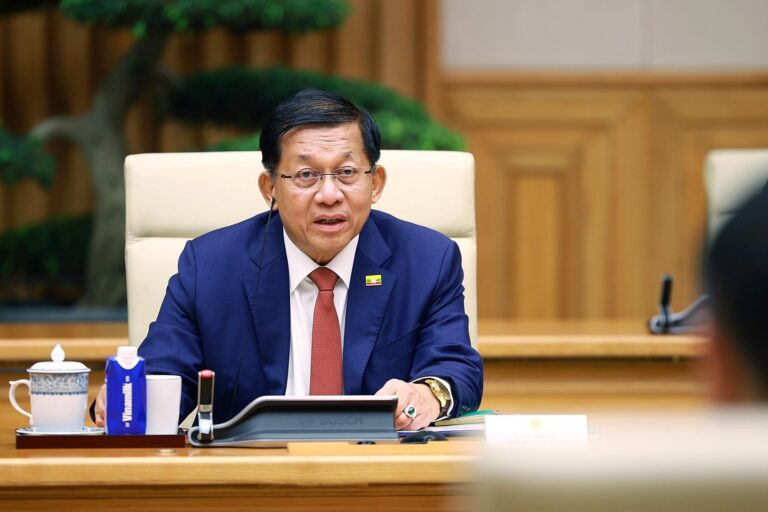

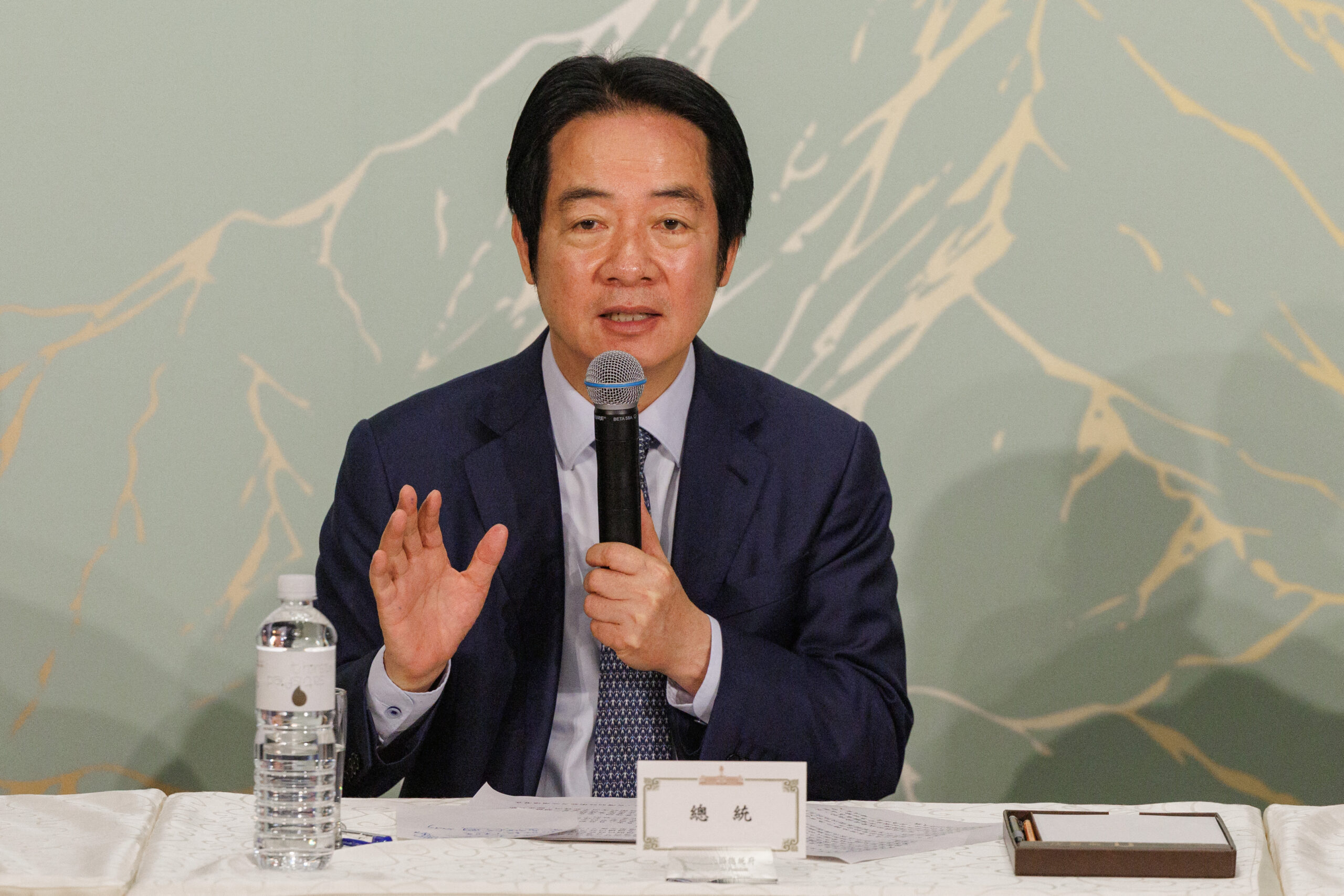
Taiwan's President Lai Ching-te takes part in a briefing with foreign correspondents in Taipei on June 18, 2026. (Photo by CHENG Yu-chen / AFP)
June 18, 2026 | Burma Independent Voice
Taiwan has resolutely rejected any unification with China, Taiwan President Lai Ching-te reiterated on Thursday, while expressing his anticipation that the United States government will expeditiously approve a pending $14 billion arms sale to bolster the island’s self-defense capabilities.
The democratically governed island relies heavily on U.S. military assistance to deter a potential military assault by China, while Washington has consistently pressured Taipei to progressively increase its national defense spending.
However, U.S. arms sales to Taiwan frequently complicate diplomatic ties between Washington and Beijing, drawing routine and fierce opposition from the Chinese government. In May, U.S. Secretary of State Marco Rubio noted that the proposed $14 billion arms package remained “under review.”
Speaking to reporters on Wednesday, President Lai maintained that he remains “highly optimistic” regarding the procurement, stating, “I hope these weapons purchases will be approved as expeditiously as possible.”
“Taiwan’s efforts to defend its national security, preserve its democratic and free way of life, and reject unification under the rule of the Chinese Communist Party should not be viewed as a provocation toward China or as being a troublemaker in the region,” President Lai told reporters in Taipei.
While the United States officially recognizes the One-China policy diplomatically, it remains legally bound by domestic law under the Taiwan Relations Act to provide the island with the necessary means to defend itself.
U.S. authorities disclosed last month that the American military is thoroughly reviewing the massive arms package intended for Taiwan to guarantee that domestic ammunition stockpiles remain sufficient following recent military operations in Iran.
President Lai’s administration has pledged to increase total defense spending to over 3% of the country’s GDP this year, proposing an allocation of NT$1.25 trillion (approximately $40 billion) to procure U.S.-manufactured weaponry alongside domestically produced drones and other military hardware.
Nevertheless, divisions persist among lawmakers within Taiwan’s legislature regarding the appropriate scale of spending to enhance defense capabilities. Last month, the opposition parties, which hold a majority in the legislature, slashed roughly one-third of the special defense budget proposed by Lai’s ruling party, ultimately approving a reduced budget of $25 billion.
China, which claims Taiwan as its own territory and has vowed to seize it by force if necessary, consistently and vehemently opposes all U.S. arms sales to Taiwan as well as any official diplomatic engagements with Taipei.
About the Author