

BIV | July 24, 2026 | 1 minute read
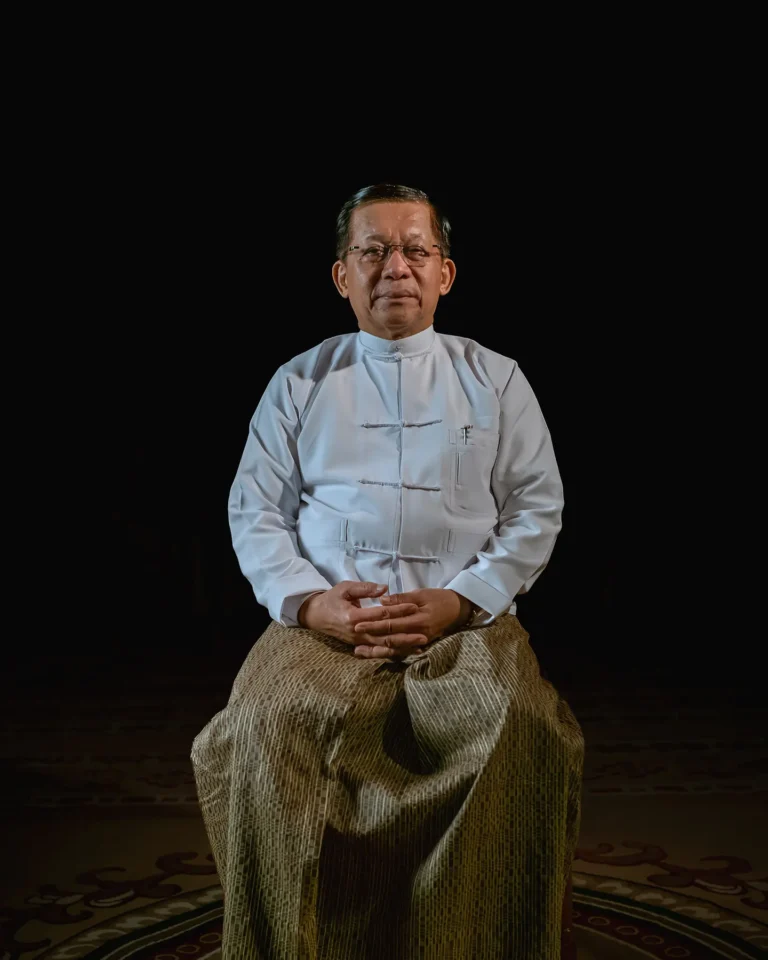
Opinion Article by Kyaw Ba
Time Erodes the Mind
Homer’s The Odyssey is not merely an epic poem glorifying victories on the battlefield. After enduring ten years of bloody warfare on the battlefields of Troy and another ten years wandering and struggling across the seas, Odysseus was separated from his homeland for a total of twenty years. The Odyssey chronicles his arduous journey home, but Homer’s core message runs far deeper than a simple tale of return. It poses a terrifying question: after surviving years amidst war, can a person ever truly return to their former life?
The bloodshed officially ceased on the day the Trojan War ended, yet the battle was far from over for Odysseus. Having defeated the enemy at Troy, he embarked on an even more brutal struggle from that day onward. Confronted by the wrath of Poseidon, mysterious mythical islands, seductive temptations, and his own human flaws, he fought for another ten years—breaking down physically and mentally—just to reach Ithaca. On this journey, the Cyclops or the Sirens were not his true enemies; rather, the unrelenting passage of time proved to be his most ruthless adversary.
Odysseus Returned as a Changed Man
Before the war, Odysseus was the king of Ithaca, living in royal comfort—a brilliant ruler, husband to Penelope, and father to the newborn Telemachus. When he departed for the battlefield, he left behind not just his throne, but his entire existence. Twenty years prior, his heart was filled with art, love, and warm family dreams. Yet twenty years—ten in Troy and ten on the journey home—proved more than enough time for a person’s life to be fundamentally altered or lost entirely.
When Odysseus finally returned to Ithaca two decades later, he was no longer the man who had left. His eyes bore the bloodstained images of war, and in his ears echoed the faint, hollow cries and silent wails of his fallen comrades. His hands had grown accustomed to blood as a prerequisite for survival. To outside observers, the king’s ruthless and merciless execution of the Suitors occupying his estate might have looked like a heroic homecoming victory. However, Homer’s inquiry exposes the inner conflict of a human being behind that triumph. For Odysseus himself, he was fighting an internal battle against deep inner conflict. The most poignant tragic realization of The Odyssey is that while the war against external enemies ended in victory, the war within the deepest recesses of the soul remains unfinished.
Nolan’s Philosophy of Time
When examining Christopher Nolan’s cinematic vision of The Odyssey alongside Homer’s original epic, a striking parallel emerges in their shared obsession: how time changes humanity. In his film adaptation of The Odyssey, Nolan deeply highlights the cruelty of time’s passage, mirroring the original poem. Understanding Nolan’s perspective transforms Odysseus’s twenty-year journey from a simple measurement of travel time into a process where years gradually erode and alter human memory, identity, love, and affection.
Indeed, this theme serves as the binding thread across Nolan’s entire filmography. Nolan’s films consistently explore the internal wounds of individuals subject to the onslaught of time. In Memento, he questioned the breakdown of identity caused by deteriorating memory. In Inception, the past becomes an inescapable maze of mental architecture. In Interstellar and Dunkirk, time ceases to be mere ticks on a clock face and becomes an invisible cosmic force slowly grinding down the human soul. For Nolan, time is an enemy capable of quietly consuming and destroying everything a person was forced to leave behind.
The Odysseuses of Myanmar
There are many reasons why the creative works of Homer and Nolan feel less like ancient mythology and more like a biography of contemporary humanity. The 20-year journey of Odysseus becomes vividly tangible when viewed through the lens of Myanmar’s youth today. Following the 2021 military coup, thousands of young people in Myanmar were swept into a storm not of their choosing. Like Odysseus, they were forced to turn their backs on their homes and head toward harsh, unforgiving battlefields.
Some find themselves amidst bombs and bullets in the jungles, while others wage their struggles near the perils of urban environments—far removed from their original lives. Some endure inside walls and iron bars, fighting a mental battle to avoid losing their identity while resisting as political prisoners. Others find themselves miles away from their old homes, living among strangers across different cultures and languages.
Regardless of the path taken, all of them look back toward the homes they left behind—homes that now exist largely in their imaginations—while attempting to rediscover themselves. In their hearts, much like Odysseus, they constantly recite a single vow like a solemn prayer: “One day, I will return home.”
A Cruel Question Raised by The Odyssey
However, The Odyssey poses a cruel question. Rather than asking whether one will reach home when the war ends, it asks: Will the home I return to after the war still be the home I sacrificed and left behind?
Anyone who departs for the battlefield—including Odysseus—leaves behind far more than physical structures. They surrender the past, present, and future, along with memories etched into their souls. In reality, “home” is much more than a point on a map. It is the living room once filled with laughter, the family dinner table, the street where they played as children, and the corner teahouse where they spent hours debating. These are the true symbols of home. What was abandoned was not merely a bed, an address, or a house; an entire life was left behind.
The tragic reality is that for some, “home” has become a door locked against them forever, an unreachable address, or simply a photograph stored in a phone gallery. Countless homes and entire villages have been reduced to ashes by the cruelty of this dark era. For others, shifts in circumstances have stripped “home” of its core essence. From Odysseus down to the young people of Myanmar today, these represent the agonizing, quiet losses experienced by those returning from war.
Loss of Self
Yet, there is a loss even more painful than losing a physical home: the loss of oneself upon returning.
Does the Odysseus who returns triumphant from the battlefield remain the same Odysseus who marched away? Here, the concept of Nostalgia comes into play—derived from the Greek words Nostos (homecoming) and Algos (pain), literally meaning the pain of longing for home. However, the nostalgia envisioned by Homer and Nolan refers to a longing for a past that can never be recovered. While it might seem that Odysseus simply missed his house, what he truly mourned was his former self—the person who once laughed and was happy inside that house.
A person may eventually reach a physical home, but they can never return to a past point in time. Odysseus made it back to Ithaca, but the young Odysseus who originally left never returned. In his place came an Odysseus carved by war, weighed down by trauma. Today in Myanmar, thousands of young people are waiting for the day they can go home. When the storms eventually clear and gentle breezes return, many may indeed reach home. But when they do, will they be able to find the selves that once laughed innocently and held bright dreams inside those walls?
For a warrior returning home only to find that their former self no longer resides there is perhaps the deepest wound among the many left by The Odyssey. A destroyed house can be rebuilt, but answering the question “Who am I?” after it has been lost amidst war and the passage of years is infinitely more difficult. Homer raised this question nearly three thousand years ago: Do they truly long for a physical house on the ground, or do they long for their pre-war selves, alive and filled with memories?
The Destruction of the Inner Realm and Society’s Duty
Wars capable of destroying lives operate on a scale far greater than individual human strength. The physical destruction of towns and buildings, alongside the tragic loss of countless lives, are visible realities that people can see and quantify. Yet, there remains a deeper, unquantifiable destruction: the silent erosion of the inner self—where war gradually consumes the soul, memory, and self-belief.
When the modern-day Odysseuses of Myanmar return home, they will not merely be searching for a physical location. Amidst the years, the conflict, and the immense losses, their most urgent task will be to rediscover the selves they were forced to leave behind. Standing by these warriors on their return journey and helping them reclaim the lives they left behind will become the most critical responsibility for the future of Myanmar society.
About the Author