
June 20, 2026 | Burma Independent Voice (BIV)
By Kyawt Maung
Among the most grotesque and deeply traumatizing atrocities generated by armed conflicts, conflict-related sexual violence and rape consistently occupy the most critical echelons. Throughout the history of Myanmar’s political crises and civil warfare, a rigorous examination of sexual violence perpetrated by the military establishment uncovers a profoundly sinister dimension, wherein physical crimes are systematically paired with the absolute dehumanization of the victims. In her seminal research text, Rape During Civil War, scholar Dara Kay Cohen posits that wartime gang rape is frequently less a product of direct top-down commands and more a highly calculated instrument of violent socialization—a mechanism designed to build peer cohesion and institutional loyalty among combatants. This dynamic becomes particularly pronounced within armed organizations populated by forced conscripts who inherently lack mutual trust; within such structures, the execution of gang rape functions as a brutal rite of passage to demonstrate institutional loyalty, sever past civilian attachments, and forge bonds of loyalty and trust among soldiers at the explicit expense of civilian women. Cohen’s empirical findings, derived from extensive field interviews with former combatants across global civil wars in Sierra Leone, Timor-Leste, and El Salvador, illuminate this systemic phenomenon.
In Myanmar’s protracted civil war, the operational depth of sexual violence perpetrated by the military transcends even these global models. Historically, the Myanmar military has relied extensively on the forced recruitment of minors and the arbitrary abduction of civilians for forced porterage. Following the post-2021 coup trajectory, the junta formalized this predatory behavior by weaponizing the conscription law to forcibly draft civilians into its ranks. According to Cohen’s theoretical framework, armed organizations heavily reliant on such coercive recruitment mechanisms exhibit a substantially higher statistical propensity to commit sexual violence against civilian populations. On the operational frontlines of Myanmar, military columns have historically and systematically utilized the abduction and gang rape of civilian women as standard operational procedures during clearance operations in rural villages.
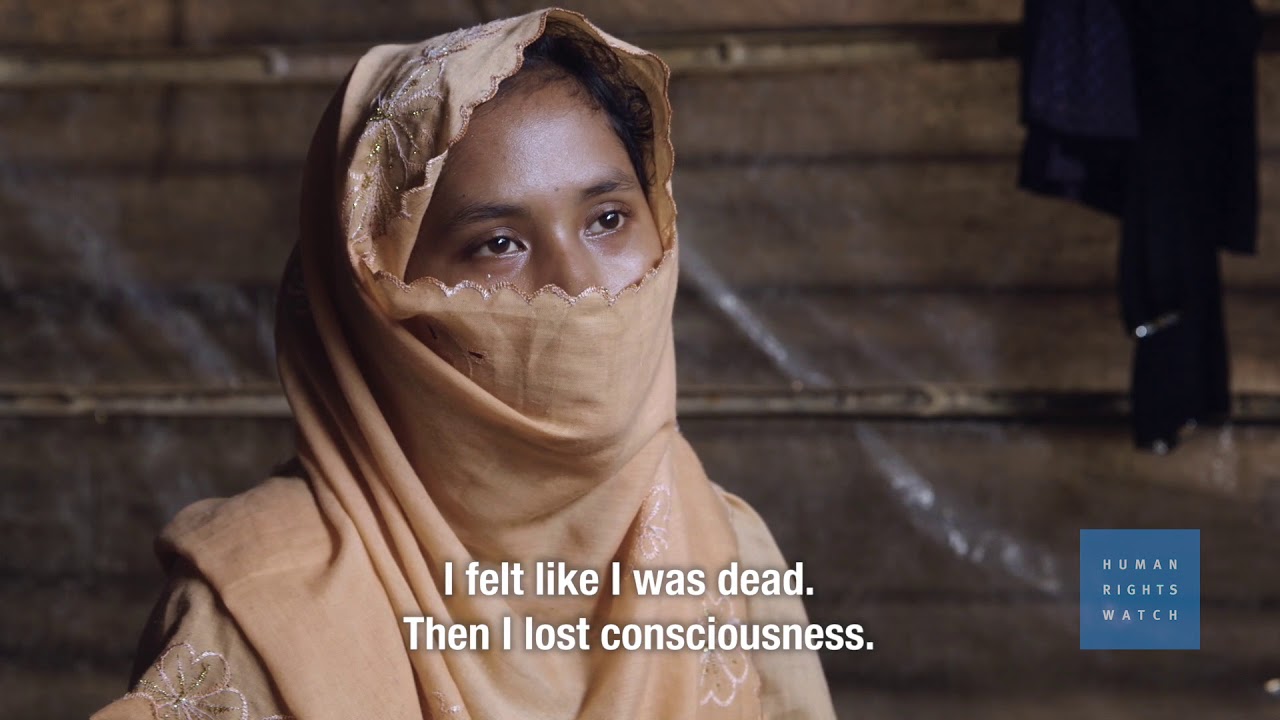
Official investigative reports published by Human Rights Watch and the United Nations conclusively establish that during the military’s counter-insurgency operations—most notably the genocidal campaigns launched in Rakhine State in August 2017—rape and sexual violence were systematically deployed against the Rohingya minority as a deliberate weapon of war to execute ethnic cleansing and instill widespread terror. The mass rapes perpetrated during the military’s operations in Rakhine State were not isolated or random acts of indiscipline; rather, as documented in the United Nations’ Rape by Command studies, they constituted a command-directed tactic orchestrated, or consciously condoned, by field commanders. The vast majority of these sexual assaults occurred during coordinated village raids, characterized by extreme brutality, public execution, and overwhelming numbers of perpetrators engaging in gang rapes. Thousands of women and young girls were explicitly targeted, with numerous victims subjected to prolonged confinement within military installations as sexual slaves, while others were bound to trees, physically mutilated, and subjected to severe torture. Furthermore, international bodies confirmed that these acts extended to Rohingya men and boys, who faced targeted sexual abuse and genital torture designed to inflict maximum societal humiliation and break the collective psychological resolve of the community.
Regrettably, this pattern of abuse is not entirely monopolized by the military establishment, as other armed factions have historically committed parallel infractions within the theater of war. Following the radical shift in the security architecture of northern Rakhine State, where the Arakan Army (AA) successfully consolidated territorial control over expansive sub-regions, Rohingya women have remained acutely vulnerable to sexual violence. A specialized report by the British-based Burmese Rohingya Organisation UK (BROUK) highlights that the very forms of sexual violence that characterized the military’s genocidal campaigns have mutated into new institutionalized mechanisms of detention, coercion, and systematic control under the current AA administration.
In the execution of genocidal campaigns, perpetrators universally rely on ideological propaganda to depict the targeted ethnic group—based on skin tone, religious affiliation, or distinct physical features—as subhuman or inherently repulsive to cultivate mass psychological detachment. During the military’s offensive in Rakhine State under the previous civilian administration, public and digital spaces were inundated with state-aligned propaganda claiming that Rohingya women were physically too repulsive to be raped, arguing that the allegations were merely fabricated political constructs. This grotesque rhetoric was not a simplistic defense mechanism, but a highly calculated strategy of dehumanization designed to strip the victims of their fundamental human dignity and moral value. The foundational error of such rhetoric lies in the flawed assumption that rape is motivated by genuine sexual desire or physical attraction. In stark contrast, conflict-related gang rape is entirely detached from carnal desire; it functions strictly as a brutal assertion of power, an exercise of absolute control, a mechanism for violent group socialization, and a systematic weapon of war deployed to inflict maximum terror and psychological castration upon an adversarial population. Consequently, when the Myanmar military executed systematic gang rapes against Rohingya women, the physical attributes of the victims were entirely irrelevant to the operational objective, which was strategically engineered to fracture the community’s social fabric and compel their permanent displacement from the territory.
The systematic weaponization of sexual violence is a historic hallmark of the military’s institutional culture of abuse, refined over decades of counter-insurgency operations against various ethnic minorities across Myanmar. Throughout the 1970s, 1980s, 1990s, and leading up to 2001, the military routinely executed village raids in Kachin State, pairing arson and forced displacement with systematic gang rapes. Documentation compiled by the Karen Women’s Organization (KWO) reveals that between 1988 and 2004, at least 125 distinct incidents of conflict-related sexual violence were verified within Karen State; tragically, approximately half of these recorded infractions were directly perpetrated by high-ranking military officers, with forty percent involving gang rape and twenty-eight percent culminating in the extrajudicial execution of the victims. Parallel atrocities have been documented in Chin and Shan states since the 1990s, where Chin women and young girls navigated a daily reality dominated by the pervasive threat of sexual assault by occupying soldiers. Comprehensive reports by the Women’s League of Burma (WLB) verify that across all ethnic minority frontier regions, both commissioned officers and low-ranking enlisted personnel have actively participated in or connived at these systemic sexual crimes.
Under successive military dictatorships, the domestic legal architecture has been explicitly engineered to grant blanket immunity to military personnel, shielding them from accountability. Simultaneously, courageous survivors and material witnesses who attempt to pursue justice face severe state-sponsored intimidation, institutional denials, and coordinated cover-ups. This deeply entrenched culture of impunity has effectively emboldened military personnel to expand these brutal methods beyond ethnic borderlands, systematically deploying sexual violence across central Myanmar regions, including Sagaing and Magway divisions, without fear of legal retribution. Survivors arriving at internally displaced person (IDP) camps endure not only severe physical trauma and acute Post-Traumatic Stress Disorder (PTSD), but also face intense social ostracization and societal stigmatization within their traditional communities due to out-of-wedlock pregnancies resulting from these assaults.
Despite targeted international sanctions aimed at penalizing these war crimes, the military apparatus remains completely insulated from domestic judicial accountability, continuing to execute these offenses under the protection of its martial power. Conflict-related sexual violence in Myanmar cannot be dismissed as random criminal conduct by isolated actors; it is an institutionalized atrocity deployed to forge cohesion among coerced combatants and a strategic weapon of war utilized by senior military leaders to break collective civilian resistance through systemic terror. As the civil war intensifies, civilian women and children remain profoundly unprotected. The escalating reports of sexual violence occurring not only within military structures but also creeping into ethnic armed organizations and revolutionary resistance factions present an increasingly alarming trend. While the United Nations has officially warned of a catastrophic surge in conflict-related sexual violence globally across active war zones, a viable institutional mechanism to protect vulnerable women and children within Myanmar remains entirely absent. Under the unchecked authority of armed actors, the protection of civilians from targeted sexual violence remains profoundly compromised, while the perpetrators continue to operate with absolute impunity.
About the Author