
June 19, 2026 | Burma Independent Voice (BIV)
By Kyawt Maung
A retrospective examination of Myanmar’s contemporary political history reveals a protracted and arduous trajectory defined by an enduring struggle against entrenched authoritarianism to establish a democratic governance model. To this day, the ultimate objective of eradicating the military dictatorship remains unfulfilled. At the absolute nexus of this bitter journey stands the indomitable figure of Daw Aung San Suu Kyi, whose unyielding resilience and refusal to capitulate under consecutive regimes remain central to the nation’s political identity. The February 1, 2021 military coup d’état and its catastrophic aftermath unleashed a wave of political turbulence that brought profound adversity not only to her personally, but to the entire population. In this volatile climate, her steadfast conviction and unaltering dedication to the democratization movement continue to serve as a foundational benchmark for the ongoing anti-junta resistance.
To comprehensively grasp her psychological fortitude, one must analyze her formative years and intellectual development. Although her father, the independence hero General Aung San, was assassinated when she was merely two years old, his legacy of national service fundamentally shaped her lifelong convictions. She pursued her undergraduate studies in Political Science at Lady Shri Ram College in New Delhi before reading Philosophy, Politics, and Economics (PPE) at St Hugh’s College, Oxford University. The liberal, pluralistic, and egalitarian intellectual environment of Oxford permanently anchored her core principles of democracy and universal human rights. Even while building a family life in the West, Myanmar remained central to her consciousness; prior to her marriage to Dr. Michael Aris, she explicitly extracted a mutual understanding that should her country and its people ever require her service, she would immediately return.
Her formal entry into the vortex of Myanmar politics occurred in 1988, when she returned to Yangon to care for her critically ill mother. Amidst the historical “8888” pro-democracy uprisings, she coalesced the movement around non-violent principles, delivering her seminal address to an estimated half a million citizens at the Shwedagon Pagoda, cementing her status as the vanguard of the popular democratic struggle against military hegemony. Following the military’s violent suppression of the protests and subsequent seizure of power, she co-founded the National League for Democracy (NLD) and launched an extensive nationwide campaign. Consequently, from 1989 onward, she endured a cumulative fifteen years of arbitrary house arrest. While the international community recognized her relentless advocacy with the Sakharov Prize and the Nobel Peace Prize, the military regime reacted by systematically extending her detention parameters. The philosophical framework articulated in her celebrated text, Freedom from Fear, became a potent cognitive weapon for the public against systemic oppression, specifically through her profound analysis of power dynamics, where she famously observed that it is not power that corrupts, but fear—the fear of losing power corrupts those who wield it, and the fear of the scourge of power corrupts those who are subject to it.
Throughout her periods of temporary release, Daw Aung San Suu Kyi consistently prioritized the collective power of the populace over the material weaponry of the armed forces. Her journey was continually punctuated by severe physical perils and targeted assassination attempts orchestrated by the state apparatus and its proxies. During her April 1989 campaign tour in Danubyu, Ayeyarwady Region, she famously confronted a military squad that had raised their rifles to open fire on her, an event historically codified as the “Danubyu Incident,” which illuminated her supreme physical courage. A far more lethal assault materialized on May 30, 2003, in the notorious “Depayin Massacre,” where her motorcade was violently ambushed near Depayin by state-sponsored ultra-nationalist thugs from the Union Solidarity and Development Association (USDA) and the Swan Ar Shin militia. This state-orchestrated assassination attempt resulted in the extrajudicial killing of numerous close aides and innocent supporters, while she narrowly escaped with her life. Despite the physical and psychological trauma of these events, her messaging remained anchored in a refusal to retaliate with hatred.
Following her final release from house arrest in 2010, she chose to navigate the regime’s institutional boundaries to structurally steer the nation onto a democratic path. Winning a parliamentary seat in the 2012 by-elections as a Member of the Pyithu Hluttaw (House of Representatives), she effectively integrated herself into the formal legislative arena. This paved the way for the NLD’s landslide victory in the 2015 general elections, enabling her to lead the first genuine civilian administration in decades. However, her civilian government operated under severe institutional constraints imposed by the military-drafted 2008 Constitution, which permanently reserved twenty-five percent of legislative seats and key defense portfolios exclusively for the armed forces. The structural limitations culminated in severe ethnic crises, most notably the Rohingya conflict in Rakhine State, which was entirely executed by the military command but served as a supreme test of her democratic governance. Her legal defense of the state framework under international law was systematically weaponized by the military establishment to diminish her global moral standing, deliberately trapping her within an intricate web of political crises designed to sustain the junta’s vast economic empire and institutional power. Even during these intensely fraught years, her public addresses were calculated to prevent the population from falling into political apathy.
The NLD secured an even greater landslide victory in the 2020 general elections. In the immediate aftermath, widespread intelligence reports indicated that the current coup leader, Min Aung Hlaing, issued at least three distinct ultimatums demanding his appointment to the presidency. Daw Aung San Suu Kyi, however, categorically refused to unilaterally trade the presidency to a military commander, recognizing that doing so would directly violate the democratic mandate of the electorate. This refusal demonstrated her unshakeable commitment to constitutional principles and illuminated her view that popular votes are non-negotiable sovereign instruments rather than chips for political horse-trading with generals. Opting to face incarceration rather than compromise democratic principles for personal power, she chose imprisonment, verifying the profound consistency of her commitment to non-violent political action.
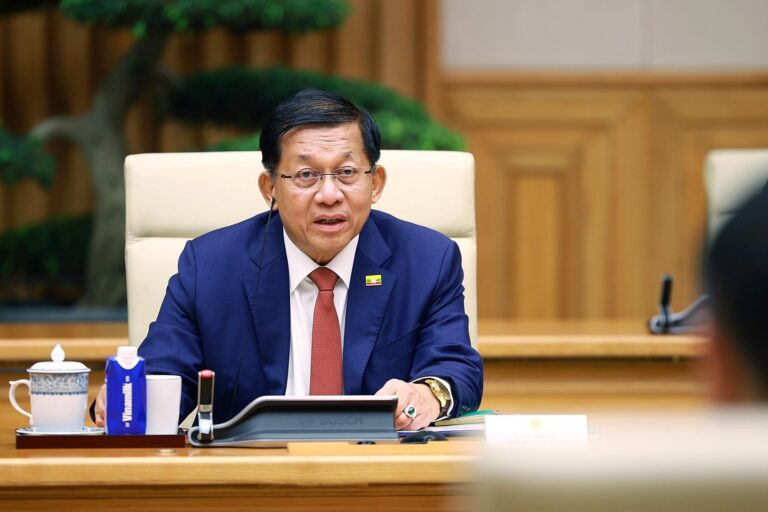
The current coup leader, Min Aung Hlaing, driven by intense personal ambition and deep-seated institutional resentment toward her immense popularity, enacted punitive measures far more draconian than those implemented by his dictatorial predecessors. Beyond merely sentencing her to protracted prison terms, the junta implemented a total information blackout regarding her status, rendering her completely invisible to the public. This absolute isolation reflects the regime’s intrinsic terror of her enduring image, recognizing that her symbolic resonance possesses an unparalleled capacity to mobilize collective public political consciousness. While the junta’s ultimate objective is her absolute erasure from Myanmar’s political landscape, this remains a strategic impossibility, as she remains permanently etched into the hearts of the populace as their chosen leader—a reality no amount of state terror can dissolve.
Intriguingly, the desire to marginalize her is no longer exclusive to the military clique; certain factions within the anti-junta resistance have also begun advocating for her removal from the political equation, often utilizing euphemistic rhetoric suggesting she should permanently retire due to her advanced age. Ultimately, the definitive determination of her ongoing role within Myanmar’s political evolution belongs strictly to the citizenry and to her own volition. Though authoritarian structures continue to abuse legal and military mechanisms to isolate her from the geopolitical stage, her lifelong endurance of house arrest and imprisonment underscores a critical reality: regardless of age or extreme physical isolation, her commitment to the democratic ideal remains entirely intact. The arduous journey she continues to navigate is fundamentally distinct from a standard struggle for executive power; it stands as a testament to an unyielding belief in national sovereignty, genuine liberty, and the ultimate triumph of the democratic will.
About the Author